Introduction
Winter weather creates serious safety and operating risks for railroads, especially when snow, ice, freezing rain, and extreme cold affect switches, flangeways, brake systems, yards, and maintenance crews. FRA Safety Advisory 2023-07 states that since the beginning of 2021, 123 rail accidents/incidents were reported to FRA as being caused, in whole or in part, by severe weather conditions or weather-related events.
Those numbers play out across four recurring operational failures every winter:
- Frozen switches that immobilize entire yards
- Burst locomotive water systems requiring million-dollar fleet repairs
- Iced-over track components creating active derailment risks
- Crews exposed to frostbite during emergency repairs in sub-zero conditions
Effective railroad freeze protection demands a proactive approach — covering equipment, chemicals, personnel, and planning — well before the first freeze arrives.
Key Takeaways
- Severe winter weather can create safety risks, service disruptions, emergency repairs, and added maintenance demands across railroad operations
- Highest-risk points: track switches, locomotive water/brake systems, stored lubricants, and wayside signaling equipment
- Pre-season inspections, PPE compliance, and switch heater testing must all be complete before temperatures drop
- Chemical products should be matched to the application, surface, equipment, storage conditions, and expected winter temperature range
- A documented storm action plan with assigned roles and pre-staged equipment is your strongest defense against winter shutdowns
The Freeze Hazards That Put Railroads at Risk
The Cascade of Freeze-Related Failures
When temperatures drop, railroad operations face a cascade of freeze-related failures that compound fast. Three failure types drive the most disruption:
- Track switch immobilization: Ice in switch points prevents proper alignment, halting traffic across entire network segments
- Sensor and detector blockage: Ice over wayside detection systems compromises safety signaling that prevents collisions and track intrusions
- Ground heave: Frozen soil expansion destabilizes ballast, causing track displacement that requires emergency excavation and geometry correction
Locomotive and Rolling Stock Vulnerabilities
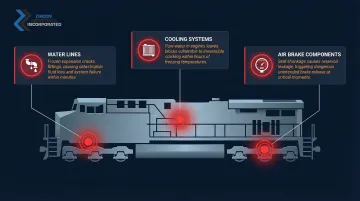
Cold weather attacks mechanical systems aboard locomotives and passenger cars with particular intensity. Three components face the greatest vulnerability:
- Water lines: Frozen water expands inside confined piping, cracking fittings and causing leaks
- Cooling systems: Freight locomotives typically run pure water rather than antifreeze, leaving shut-down engines exposed to block-cracking failure within hours
- Air brake components: Freezing degrades seal integrity and reservoir pressure, directly affecting stopping ability
SMART-TD has reported cold-weather safety concerns involving New York Air Brake DB-10 components. The article states that operation below 40°F has been associated with increased reports of possible valve failures and that malfunctioning valves may prevent trains from entering emergency braking mode during cold weather.
Across large fleets, these failures accumulate fast. A single cracked engine block can sideline a locomotive for days; multiply that across dozens of units during a cold snap and the operational cost becomes significant.
Lubricant and Chemical Storage Failures
Stored industrial lubricants and deicer fluids become too thick to pump in cold weather, creating both operational failures and safety hazards. Fluids that flow freely in summer may become completely unpumpable at freezing temperatures. The pour point of an oil indicates the lowest temperature at which fluid movement occurs, but the Mini-Rotary Viscometer (MRV) test provides a more accurate measure of whether oil can actually be pumped during cold starts. When viscosity becomes too high, equipment experiences bearing starvation and metal-to-metal contact. Choose lubricants, deicers, and sprayable fluids based on the site's lowest expected temperatures, product storage requirements, viscosity behavior, pumpability, and application method. Operators should review each product's technical data sheet, SDS, storage guidance, and equipment compatibility before winter use.
Pre-Season Freeze Protection Safety Guidelines
Freeze protection safety begins months before winter arrives—summer and early fall are the correct windows to inspect, repair, and stage equipment, not December when temperatures have already dropped and failures are occurring.
General Safety Precautions
Personal Protective Equipment Requirements:
OSHA's cold stress guidance notes that outdoor workers exposed to cold and windy conditions are at risk of cold stress, and wind chill helps determine exposure risk. Employers and railroad operators should align PPE requirements with OSHA guidance, railroad-specific rules, and site procedures.
- Footwear: Union Pacific's minimum PPE document lists safety-toe boots with a minimum 6-inch height, defined heel, lace-up style, no flat-bottom boots, and no slip-on boots.
- Boot spikes or ice cleats for walking surfaces around switches, depots, and railcars
- Three-layer clothing system: moisture-wicking inner layer, insulating middle layer, wind/rain-resistant outer layer
- Insulated gloves that maintain dexterity for equipment handling—avoid tight clothing that restricts blood circulation
All walking paths in these zones must be routinely inspected and treated with anti-slip materials throughout the season—PPE requirements don't end at the worker; they extend to the workspace itself.
Workspace Readiness Requirements:
- Clear switches and housings of mud and debris during summer—packed dirt is far harder to remove once frozen
- Ensure drains and gutters are unobstructed to prevent ice dams and flooding during freeze-thaw cycles
- Confirm railroad ties are visible above the snow line with minimum 1.5-inch clearance maintained under flangeways—this is the baseline standard to prevent wheel lift and derailments
Norfolk Southern's winter safety bulletin states that packed mud, snow, and ice in flangeways must be cleared to a minimum depth of 1.5 inches. It also warns that ice or snow mixed with mud can have the strength of concrete in extreme cold and can lift a wheel, leading to a possible derailment.
Pre-Season Equipment Setup Safety
Switch Heater Inspection and Testing:
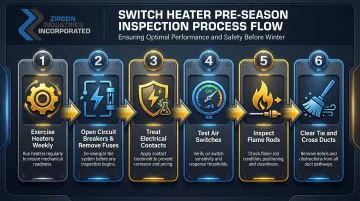
Safe switch heater preparation requires systematic fall inspection and testing:
- Exercise heaters weekly starting in early fall to break adhesions in moving parts and clear insect/rodent accumulations
- Open circuit breakers and remove fuses from heater power lines in spring to protect against off-season electrical damage
- Treat exposed electrical contacts with oxidation-inhibiting compounds to ensure reliable winter startup
- Test air switches by blocking intake 80% (should continue running) then 90% (should trigger alarm)—freezing or calibration drift are common cold-weather failures
- Inspect flame rods for soot, cracked ceramic, and signal strength (3-8 micro amps)—oxidation causes false flame-out alarms
- Clear tie ducts and cross ducts of mud and debris that will prevent heat from reaching switch points
Gas-Powered Switch Heater Risks:
Propane vapor pressure can drop sharply in cold weather. One propane vaporizer manual notes that incoming liquid propane pressure may range from 40 PSIG on very cold days to 120 PSIG on very warm days with direct sunlight on the tank. For gas-fired switch heaters or other propane-powered winter equipment, operators should verify fuel pressure, regulator suitability, and cold-weather setup using railroad-approved equipment guidance.
Address this before the first freeze:
- Install tank vaporizers before temperatures fall
- Use insulated tank covers to maintain gas pressure
- Include pressure checks in pre-season sign-off checklists
- Verify regulators are rated for extreme low temperatures
Automated Deicer Application Systems:
For conveyor systems and bulk material handling equipment, Zircon offers automated spray systems for Liquid Heat Conveyor Belt Deicer & Ice Preventative. Liquid Heat is positioned for conveyor belts, rollers, idlers, chutes, switches, truck beds, and related equipment.
Safe Operating Practices in Winter Railroad Conditions
Federal regulations and Class I operating rules mandate strict procedures when temperatures plummet.
Operating Limits in Winter Conditions
Winter operations require adjusted parameters to maintain safety:
- Shortened train lengths in extreme cold to reduce break-apart risk and ensure air compressors can maintain adequate brake pipe pressure
- Adjusted operating speeds on ice-prone or severe-weather segments, based on each railroad's operating rules, weather thresholds, territory, and dispatcher instructions
- Mandatory pre-trip inspection of brake systems and water drain valves before departure
Under 49 CFR § 232.107, the FRA defines "cold weather" as ambient temperatures below 10°F (-12.2°C). At these temperatures, yard air reservoirs must be equipped with operable automatic drain systems or manually drained at least once daily. Either way, the goal is the same: keep moisture out of train brake lines before it freezes.
Air brake systems require winterized inspection protocols—frozen brake lines are a direct safety hazard, not an operational inconvenience.
Those compliance baselines cover the starting point. Once trains are moving, the focus shifts to real-time monitoring and field behavior.
Safe Operations During Active Winter Weather
Monitoring Behaviors During Winter Operations:
- Remote sensor checks on switch status and track temperature
- Real-time observation of wayside detector functionality
- Visual inspection protocols for ice accumulation on signal equipment and crossing gates
Skipping a detector inspection because "the system was fine yesterday" is how incidents start. Conditions change overnight; the inspection does not take longer than the delay a failure causes.
Safe Procedures for Manually Clearing Frozen Switches:
When heaters have not fully cleared ice:
- Never use picks or sharp tools that could damage switch components
- Use switch brooms and approved deicing compounds only
- Ensure locomotive and train traffic is held before any personnel approach a live switch area
- Avoid assuming a switch is safely isolated without confirmed signal
Behavioral Safety Risks Unique to Winter:
- Skipping cold-weather PPE for a "quick" task outside — frostbite does not wait for long shifts
- Skipping switch heater checks because they worked last season — components fail over the off-season
- Forcing pressure into frozen lubricant drums — frozen systems rupture under pressure and create fire hazards
Treating these risks as unlikely is the first step toward an avoidable incident. Build the checks into the routine before winter arrives, not after the first failure.
Chemical Deicer and Environmental Safety Guidelines
Selecting Temperature-Appropriate Deicers
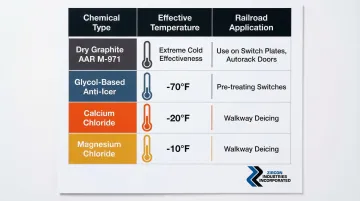
The deicer must be rated for the actual operating temperature range of the region, not just general winter use. A product with a -20°F effective range is a liability at -40°F.
Do not refer to AAR-certified deicers unless the client provides documentation for that exact claim. AAR M971-93 applies to Zircon's AAR Certified M971-93 Lubricants, led by Dry Graphite Lubricant - Approval M971-93. Dry Graphite Lubricant is a railroad lubricant for switches, coupling, hinges, autotrack equipment, thread lubricants, and other metal-to-metal wear surfaces. Liquid Heat Conveyor Belt Deicer & Ice Preventative is a separate freeze-control product for conveyor systems, truck beds, rollers, idlers, chutes, and related material-handling equipment.
Chemical Performance by Temperature:
| Product / Material Type | Primary Use |
|---|---|
| AAR Certified M971-93 Lubricants such as Dry Graphite Lubricant – Approval M971-93 | Railroad switches, coupling, hinges, autotrack equipment, thread lubricants, and metal-to-metal wear surfaces |
| Liquid Heat Conveyor Belt Deicer & Ice Preventative | Conveyor belts, rollers, idlers, chutes, switches, truck beds, and related material-handling equipment |
| Walkway deicers / salts | Walkways, yards, and facility surfaces |
| Rail switch anti-icers | Track switch anti-icing |
Safe Storage Requirements
Drums and storage containers must be kept at or above the product's recommended storage temperature to prevent thickening or separation:
- Never apply heat directly with an open flame to a chemical drum—use only approved drum heating methods
- Ensure containers are labeled, sealed and stored away from ignition sources
- Store in covered areas to prevent freezing and environmental contamination
Application Safety
Workers applying chemical deicers to rails, switches, or conveyor systems must follow strict safety protocols:
- Wear chemical-resistant gloves and eye protection appropriate to the product SDS
- Apply only manufacturer-recommended quantities—over-application creates runoff hazards and can degrade rail surface traction
- Do not apply deicers to electrically live rail components without confirming products are rated for such environments
Environmental Interaction Risks
Salt and chemical deicers can affect nearby ballast, drainage systems, soil, and waterways depending on the product, dosage, runoff path, and site conditions. Operators should follow product labels, SDS guidance, local environmental requirements, and site-specific runoff controls. In general, anti-icing before ice bonds to a surface may reduce the need for aggressive reactive removal, but any product-use or runoff-reduction claim should be supported by product-specific documentation.
Common Winter Safety Mistakes That Cost Railroads the Most
Pre-Season Preparation Failures
The most consequential mistakes share a common thread—assuming last year's preparations still apply:
- Skipping pre-season switch heater testing: Mechanical components fail during dormancy; what worked in March may not function in November
- Failing to stock consumable replacement parts before winter: This forces improvised repairs during storms when supply chains are disrupted
- Not staging snow removal equipment and salt in high-risk locations: Waiting until forecasted events arrive guarantees delays
Each mistake produces the same outcome: crews scrambling to respond rather than executing a plan they've already rehearsed.
Reactive Rather Than Proactive Chemical Deployment
Waiting until ice has already formed on switches or conveyors is far less effective than pre-treating surfaces before a storm. Anti-icing applied before ice bonds to metal requires less product and prevents the stubborn adhesion that makes reactive removal difficult.
Once ice sets, removal becomes a hazard in itself: workers chipping at frozen metal near live track create real injury risks and risk damaging equipment in the process.
BNSF says its winter planning starts long before the first freeze. Its published winter action plan notes that BNSF has over 5,000 switch heaters, positions snow-removal equipment and supplies across the network, and establishes divisional command centers with key personnel ready to activate action plans 24/7 when winter weather strikes.
Inadequate Winterization Planning
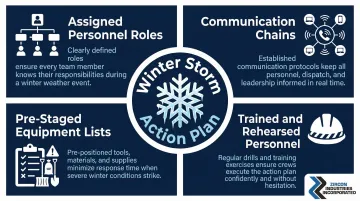
Railroad operations without a documented winter storm action plan default to chaotic reactive responses during storms. Plans must include:
- Assigned personnel roles with clear accountability
- Communication chains to interchange partners
- Pre-staged equipment lists with verified inventory
- Trained personnel who have rehearsed procedures
Class I railroads develop region-specific plans in summer. Short lines and industrial rail operators should follow the same discipline—by the time the first hard freeze arrives, the planning window has already closed.
Conclusion
Effective railroad freeze protection comes down to four elements working together: chemical products matched to your actual operating temperatures, equipment staged and maintained before the cold arrives, trained personnel following documented procedures, and a winter storm action plan with assigned roles and pre-positioned resources. Each one matters. None of them works in isolation.
Treat winter readiness as an operational discipline that starts in late summer — not a checklist you rush through in November. A freeze-related incident, repair delay, or service disruption will cost far more than the preparation you skipped. Railroads that hold up through harsh winters typically don't have better luck. They have better protocols in place before the first freeze hits.
Frequently Asked Questions
Can ice freeze over train tracks?
Yes. Ice accumulates on and around train tracks—particularly in switch points and flangeways—through freezing rain, snowmelt refreezing, and freeze-thaw cycles. This is precisely why switch heaters, anti-icing compounds, and regular manual inspections are standard winter practice across the industry.
How did railroads keep their water towers from freezing?
Historically, railroads insulated wooden water tanks, kept water circulating to prevent stagnation, and used heat sources such as coal stoves or steam from pump houses. Modern facilities use electric heat tracing, thermostatic drain valves, and insulated enclosures to achieve the same result with greater reliability and reduced maintenance.
Does a freeze miser really work?
Thermostatic freeze-protection valves can help protect water lines by allowing water to drain or flow when temperatures approach freezing, depending on the product design. If discussing railroad locomotive or passenger-car use, add a railroad-specific source or generalise the answer to facility water lines and exposed piping.
Is there a snow plow for train tracks?
Yes. Railroads use dedicated snow-removal equipment such as rail plows, rotary snowplows, snow blowers, and switch-heating equipment depending on territory, snowfall, and operational needs. BNSF's winter planning article notes that railroads position snow-removal equipment and supplies before winter events and use switch heaters to keep remote-controlled switches from freezing.
What temperature is too cold for safe railroad operations without additional freeze protection measures?
Most railroad systems activate switch heaters, anti-icing chemicals, and pre-trip brake inspections once temperatures approach 32°F. Sub-zero conditions trigger heightened protocols for brake freeze, gas pressure drop, and lubricant failure—and federal regulations mandate specific cold-weather procedures at 10°F and below.
What are the most important safety checks before a winter storm arrives at a rail yard?
Run through these priorities before a storm hits:
- Confirm switch heaters are operational and fueled
- Stage personnel PPE and verify it's accessible
- Check deicer supplies are stocked and stored at proper temperatures
- Inspect and treat walking paths and stairways for ice
- Communicate the winter storm action plan to all frontline staff and interchange partners