Introduction
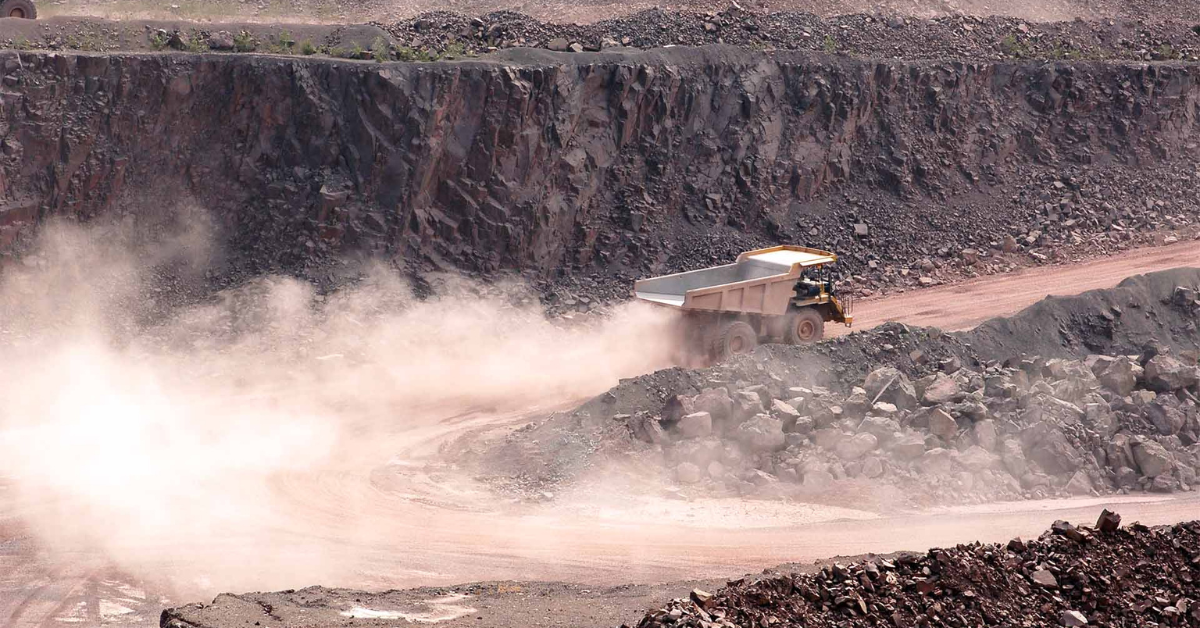
Quarry operations generate dust at every stage—blasting, crushing, screening, and haul road transport—making uncontrolled particulate emissions one of the most persistent and costly problems in the aggregates industry. NIOSH data from more than 55,000 worker exposure samples collected between 2000 and 2019 found that 27.3% exceeded exposure limits for respirable crystalline silica.
MSHA, OSHA, and the EPA have intensified enforcement around Respirable Crystalline Silica (RCS) exposure limits and fugitive emissions, resulting in huge fines across the metal and nonmetal mining sector. Left uncontrolled, dust creates compounding costs beyond regulatory penalties.
This guide covers the top 10 dust control solutions proven in quarry environments, explains what makes each one effective, and provides a practical framework for matching the right solution to your operation's specific emission points and conditions.
TLDR
- Quarry dust ranges from coarse aggregate fragments to fine RCS particles—each posing distinct health, regulatory, and community risks
- Chemical dust suppressants and haul road treatments deliver the best long-term cost-per-ton performance for high-traffic areas
- Effective control layers solutions: baghouses for processing areas, mist cannons for blast zones, chemical treatment for roads
- Turnkey chemical suppliers handle delivery and application, eliminating labor-intensive dust control jobs entirely
- MSHA's 50 µg/m³ silica exposure limit for metal/nonmetal mines is now in effect, making engineering controls and compliant dust suppression programs an immediate priority.
Why Dust Control Matters in Quarry Operations
Quarry dust consists of solid particles ranging from coarse aggregate fragments to fine Respirable Crystalline Silica (RCS), generated at every stage from extraction to transportation. While visible dust clouds draw attention, the finest particles—those under 10 microns—are especially dangerous: they penetrate deep into lung tissue and cause silicosis, chronic bronchitis, emphysema, and lung cancer.
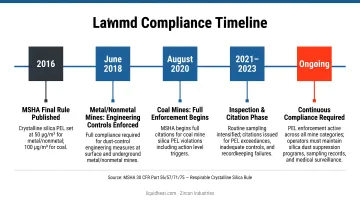
The regulatory landscape has tightened in recent years. MSHA's final rule establishes a uniform permissible exposure limit (PEL) of 50 micrograms per cubic meter (50 µg/m³) for an 8-hour time-weighted average, with metal and nonmetal mine operators required to comply by April 8, 2026. This aligns with OSHA's existing PEL for general industry and construction. MSHA's Silica Enforcement Initiative, launched in June 2022, has expanded silica sampling and increased oversight at mines with previous citations, resulting in enforcement actions, fines, and temporary shutdowns at non-compliant sites.
Compliance is only part of the equation. Uncontrolled dust carries real operational and financial costs:
- Accelerates wear on crushers, conveyors, and mobile equipment — shortening service life and increasing maintenance frequency
- Degrades haul roads faster, requiring more frequent grading and surface treatments
- Triggers community complaints that can block permit renewals and expansion applications
- Generates workers' compensation claims from occupational lung disease — long-term liabilities that far exceed the cost of preventive controls
Top 10 Dust Control Solutions for Quarry Operations
These solutions were selected based on proven effectiveness at quarry-specific emission points, operational practicality, and cost-efficiency across diverse site conditions.
Chemical Dust Suppressants for Haul Roads
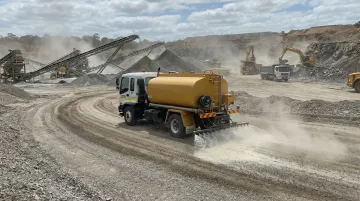
Hygroscopic chemical suppressants, such as calcium chloride and magnesium chloride, attract ambient moisture to keep road surfaces damp. They bind fine particles together and prevent dust bloom from haul truck traffic. These treatments are among the most cost-effective long-term solutions for unpaved internal roads.
Advanced formulations go beyond basic chloride salts. Some products manage both newly generated and settled dust on a daily basis, cutting reapplication frequency and maintenance burden. Application longevity varies by product. Chloride-based treatments typically last several weeks to a few months, depending on traffic volume and climate.
| Best for | High-traffic unpaved haul roads and access roads |
| Application method | Water truck or automated spray system |
| Key advantage | Long-lasting suppression. Hygroscopic properties maintain effectiveness between applications. |
Water Spraying and Fixed Misting Systems
Fixed or mobile water spray nozzles installed at crushers, screens, conveyor transfer points, and haul roads are the most widely deployed dust suppression method in quarries. Low equipment cost and ease of deployment drive that adoption. These systems provide immediate surface suppression by wetting exposed material.
The key limitation is water volume. Standard spraying creates runoff, mud, and erosion risk. Suppression is also temporary. Particles beneath the wet surface layer re-release when disturbed by equipment or wind. Adding a surfactant additive improves wetting efficiency and reduces volume requirements by lowering water's surface tension. ZHP Water Wetter from Zircon Industries is a non-ionic surfactant designed for exactly this purpose. It's compliant with OSHA 1926.1153 and dilutes at ratios of 1,500:1 to 3,000:1, meaning a small quantity treats a large volume of spray water.
| Best for | Crusher areas, screens, stockpiles, and active working faces |
| Application method | Fixed nozzle arrays or water trucks |
| Key advantage | Low cost and widely available. Surfactant additives improve performance significantly. |
Atomized Mist Cannons
Atomized mist cannons propel millions of ultra-fine water droplets via high-powered fans, creating a mist cloud that intercepts and captures airborne dust particles before they escape the emission zone. Matching droplet size to particle size is critical for effective capture. Properly calibrated systems can substantially reduce PM10 and PM2.5 concentrations at the source.
Mist cannons use a fraction of the water of conventional spraying, dramatically reducing runoff. They can be positioned downwind of blast zones, around stockpiles, or near loading operations and set to oscillate for wide-area coverage, reducing labor requirements versus hose-based suppression.
| Best for | Blasting events, stockpile management, loading/unloading zones |
| Application method | Ground-mounted or tower-mounted cannons (autonomous or remote-operated) |
| Key advantage | Covers large areas with minimal water use. Requires minimal operator presence. |
Enclosure and Containment Systems
Physically enclosing dust-generating equipment—such as crushers, screens, and conveyor transfer points—with metal or flexible covers fitted with dust-tight seals prevents particulate from escaping into the work environment or atmosphere. For stationary processing equipment, this is the most direct form of source control available.
Enclosures must be paired with negative-pressure ventilation to remain effective. Standalone enclosures without airflow management trap and concentrate dust, worsening indoor air quality for maintenance crews and creating explosive dust accumulation hazards.
| Best for | Crushers, screens, conveyor transfer points |
| Application method | Structural installation (typically permanent or semi-permanent) |
| Key advantage | Prevents dust escape at the source. Reduces the need for downstream suppression. |
Dust Collection Systems (Baghouses and Cyclones)
Industrial dust collectors—including baghouse filters, cyclone separators, and electrostatic precipitators—are installed in conjunction with enclosed equipment to capture and remove airborne particles from ventilated air streams before discharge. Captured dust can often be reintegrated into aggregate product, recovering value from waste streams.
Well-maintained fabric filter systems routinely capture upwards of 99.9% of fine airborne particles, including respirable silica fractions. That level of performance makes them essential for meeting MSHA's PEL. Cyclones handle coarser particles efficiently but struggle with sub-micron fractions. They typically serve as precleaners upstream of baghouses rather than standalone controls.
| Best for | Enclosed crushing/screening buildings and conveyor enclosures |
| Application method | Integrated with ventilation ducting (permanent installation) |
| Key advantage | High capture efficiency for fine and respirable particles. Supports regulatory compliance. |
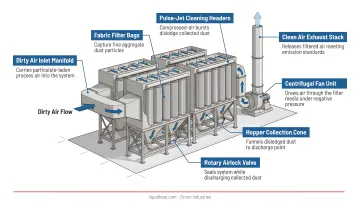
Dust collection systems represent a capital investment with ongoing filter maintenance costs, but they are typically required by regulators for enclosed processing areas and provide the most reliable path to MSHA compliance.
Polymer-Based Soil and Road Stabilizers
Polymer-based stabilizers are applied to unpaved road surfaces and stockpile areas to bind fine particles together and to aggregate, forming a compacted, durable surface that resists erosion and reduces dust generation under heavy truck traffic.
Unlike hygroscopic salts, polymers don't rely on ambient moisture. That makes them effective in dry climates where chloride treatments lose their grip. Formulation matters: biopolymer products can degrade rapidly after rainfall due to leaching, while synthetic polymer emulsions tend to last considerably longer.
| Best for | Haul roads, parking areas, material storage pads in dry climates |
| Application method | Diluted spray application via water truck |
| Key advantage | Effective in low-humidity conditions. Improves road surface compaction and longevity. |
Windbreaks and Physical Barriers
Erecting windbreak fences, netting barriers, or vegetative buffers around stockpiles, active faces, and perimeter roads reduces ambient wind speeds that lift and carry dust particles beyond the site boundary. This is a critical measure for quarries adjacent to residential areas where community relations directly impact permit viability.
Windbreaks are a supporting control measure rather than a primary solution. They're most effective when sized to match the height of the stockpile and positioned upwind.
| Best for | Stockpile perimeters, site boundaries near communities |
| Application method | Semi-permanent installation (fencing or planting) |
| Key advantage | Passive, low-maintenance protection against off-site fugitive dust migration |
On high-wind days, pairing windbreaks with active surface suppression delivers the best outcomes. Neither measure alone is sufficient for sites with close community neighbors.
Haul Road Speed Management and Traffic Controls
Vehicle speed is directly proportional to dust generation on unpaved roads. A study on gravel roads found that just a 5 mph drop in average fleet speed, from 40 down to 35, was enough to cut airborne dust by close to 40%.
Speed management works best as a complementary measure paired with road surface treatment. It also reduces road wear, lowering maintenance costs and the frequency of surface reapplication needed. Some operations implement limits as low as 15 mph inside processing areas where visibility and pedestrian safety are concerns.
| Best for | All internal unpaved haul roads and site access routes |
| Application method | Operational policy, signage, and enforcement |
| Key advantage | Zero chemical cost. Reduces road degradation in addition to dust. |
Automated Dust Monitoring and Remote Control Systems
Modern quarry dust management increasingly integrates real-time particulate monitoring sensors, programmable logic controllers, and automated suppression triggers—allowing suppression systems to activate based on measured dust levels rather than fixed schedules, reducing both water/chemical use and labor.
Automation removes workers from high-exposure zones, reduces human error in suppression coverage, and provides auditable compliance data for MSHA exposure monitoring requirements. While MSHA acknowledges that real-time dust monitors help identify overexposure conditions, the final rule relies on laboratory analysis of samples for compliance purposes, making continuous monitoring a supplementary best practice rather than a compliance substitute.
| Best for | Large-scale operations with multiple simultaneous emission points |
| Application method | Sensor network integrated with suppression system controls |
| Key advantage | Reduces product waste. Supports regulatory documentation and improves worker safety. |
Respiratory Protection (PPE) as Last-Line Defense
When engineering controls cannot fully eliminate dust exposure—particularly during maintenance, inspection, or emergency situations—NIOSH-approved respiratory protection devices (from half-face FFP3 masks to powered air-purifying respirators) are required as a final layer of protection. OSHA's hierarchy of controls framework places PPE last, after elimination, substitution, engineering controls, and administrative controls.
PPE does not replace source controls. OSHA and MSHA strictly enforce the hierarchy of controls—PPE cannot serve as a primary defense unless engineering controls are proven infeasible. Quarry operators must maintain a written respiratory protection program covering fit testing, medical evaluation, worker training, and regular replacement schedules.
| Best for | Maintenance crews, inspection personnel, emergency situations |
| Application method | Individual-issue, program-managed under written plan |
| Key advantage | Regulatory-required last line of defense when source controls are temporarily inadequate |
How to Choose the Right Dust Control Solution for Your Quarry
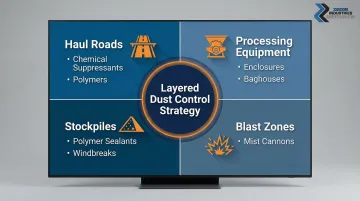
The most common mistake quarry operators make is selecting a single universal treatment and applying it across all emission points. Effective dust management requires matching the solution to the specific dust source type (haul road, crusher, stockpile, blast zone) and environmental conditions (humidity, wind, proximity to communities).
Six factors should guide your selection decision.
Emission Source Type and Location
Match each solution to its specific source:
- Haul roads require continuous surface stabilization (chemical suppressants or polymers)
- Processing equipment needs source capture (enclosures + baghouses)
- Stockpiles benefit from surface crusting (polymer sealants) and windbreaks
- Blast zones demand mobile interception (mist cannons)
Regulatory and Environmental Constraints
Compliance requirements vary by site and significantly narrow your options:
- Under MSHA's final silica rule, no miner's full-shift exposure can exceed 50 µg/m³. Metal/nonmetal mines face an April 2026 deadline.
- State EPA permits may impose stricter fugitive emission limits.
- Waterway proximity may restrict chloride-based suppressant use. EPA's 1988 water quality guidance sets a chronic freshwater threshold of 230 mg/L for chloride to protect aquatic life.
Water availability also matters. High-volume spraying creates erosion risk and requires stormwater BMPs. Mist cannons use significantly less water than conventional spraying, while arid climates favor polymer stabilizers over hygroscopic salts.
Climate Conditions, Application Frequency, and Cost
Climate directly affects which suppressants work reliably. Calcium chloride starts pulling moisture from the air at lower humidity levels than magnesium chloride, giving it an advantage in drier conditions. Polymers function independently of humidity levels.
Application frequency matters for budget planning. Chemical suppressants can last several weeks to a few months per application, while water-only treatments may require daily reapplication. Automated systems reduce manual labor and product waste.
Evaluate total cost of ownership over a multi-year horizon, factoring in reapplication labor, equipment corrosion risks from chlorides, haul road maintenance savings, and regulatory compliance costs.
Conclusion
No single dust control solution covers every quarry emission point. The most effective operations address haul roads, processing equipment, stockpiles, and workforce exposure as distinct challenges, each requiring its own approach.
When selecting a solution, evaluate total cost per application cycle, regulatory compliance performance, and impact on road maintenance frequency, not upfront product cost alone.
Zircon Industries has supplied dust control and freeze control products to quarry and mining operators since 1970. To find a distributor carrying the full dust control line, check the distributor listings, or contact the Zircon team to walk through which products fit your dust sources.
Frequently Asked Questions
What is the most effective dust control method for quarry haul roads?
Hygroscopic chemical suppressants (calcium chloride or magnesium chloride) paired with polymer stabilizers usually deliver the best long-term performance for haul roads. They bind fine particles, maintain surface compaction, and reduce reapplication frequency to a few times per year versus daily watering. Adding a surfactant to spray water further improves dust capture on active surfaces.
How does calcium chloride differ from magnesium chloride for dust suppression?
Calcium chloride starts absorbing moisture from the air at lower humidity levels than magnesium chloride, making it more effective in drier conditions. It also performs better at lower temperatures. Magnesium chloride is sometimes preferred near waterways because of its lower chloride concentration per unit volume. The right choice depends on your site's climate, proximity to water bodies, and local environmental permit conditions.
What are OSHA and MSHA regulations for respirable silica dust in quarry operations?
Miners' airborne silica intake over a full shift can't go above 50 µg/m³ under both OSHA and MSHA rules. Quarry and aggregate operations classified as metal/nonmetal mines are subject to this standard. Violations can lead to citations, financial penalties, and mandatory shutdowns of affected work areas.
How often should dust suppressants be reapplied at a quarry site?
Reapplication frequency depends on product type, traffic volume, rainfall, and temperature. Water-only treatments may need daily reapplication, while chloride-based suppressants can remain effective for several weeks to a few months. Specialized formulations like polymer-based stabilizers or road-binding products can extend that window further in some conditions.
Are chemical dust suppressants environmentally safe for use near waterways?
Chloride-based suppressants can raise chloride levels in nearby groundwater or streams if over-applied. EPA's 1988 water quality guidance sets a four-day average freshwater threshold of 230 mg/L for protecting aquatic organisms. Follow manufacturer dosing guidelines and verify state environmental permit conditions. Glycerin-based and other biodegradable products are better suited for operations near sensitive water bodies.