The consequences go beyond fines. Silica exposure causes irreversible conditions, including silicosis, lung cancer, COPD, and kidney disease. Project shutdowns, worker health claims, and repeat citations can stall operations and erode your firm's standing with clients and bonding companies.
This guide walks site managers through the construction dust regulations OSHA enforces most aggressively, what compliance requires under 29 CFR 1926.1153, and the practical engineering controls and documentation needed to protect workers and avoid citations.
TLDR
- OSHA regulates multiple construction dust types, with respirable crystalline silica under 29 CFR 1926.1153 enforced most strictly
- Employers choose between Table 1 task-specific controls (no monitoring required) or alternative methods requiring exposure monitoring and PEL compliance
- Engineering controls—wet suppression, dust suppressants, enclosed cabs, HEPA vacuums—must come before respirators
- Written exposure control plans, designated competent person, medical surveillance, and training are mandatory for all covered employers
- Recordkeeping failures are independently citable violations
What Types of Construction Dust Does OSHA Regulate?
OSHA's construction dust rules extend well beyond silica. Site managers must address multiple dust categories, each carrying specific regulatory obligations.
Major Regulated Dust Types
Respirable crystalline silica receives the strictest regulation under 29 CFR 1926.1153. Common tasks that generate silica exposure include:
- Masonry saws, handheld power saws, and grinders
- Jackhammers, drills, and vehicle-mounted drilling rigs
- Crushing, milling, and demolition with heavy equipment
- Abrasive blasting
Other construction dusts governed by specific OSHA standards include:
- Asbestos (29 CFR 1926.1101) covers disturbing asbestos-containing materials during renovation, demolition, or repair
- Lead (29 CFR 1926.62) regulates exposure from cutting, welding, grinding, or disturbing painted surfaces
- Particulates Not Otherwise Regulated (PNOR) (29 CFR 1910.1000) sets limits for nuisance dusts like wood dust and paper processing byproducts
- Coal dust falls primarily under MSHA jurisdiction (30 CFR Parts 70/71), though OSHA can cite independent contractors at mine sites when MSHA standards don't apply
General Duty Clause: The Regulatory Backstop
Even when no specific standard covers a particular dust hazard, OSHA can still act. Section 5(a)(1) of the OSH Act says employers must keep their workplaces free of known hazards that could cause death or severe injury.
The General Duty Clause allows OSHA to cite employers for uncontrolled dust hazards when they knew the hazard existed and failed to address it.
OSHA's Silica Rule Explained: What 29 CFR 1926.1153 Requires
The construction silica standard—29 CFR 1926.1153—took full effect in June 2017 and fundamentally changed how construction sites manage silica exposure. The standard applies when worker exposures to respirable crystalline silica may reach or exceed 25 μg/m³ as an 8-hour time-weighted average (TWA) under any foreseeable conditions.
Common Silica-Generating Tasks
Site managers must recognize which construction activities create dangerous silica exposure. The rule covers operations including:
- Stationary masonry saws and handheld power saws (any blade diameter)
- Handheld grinders for mortar removal and surface grinding
- Handheld and stand-mounted drills
- Jackhammers and handheld chipping tools
- Vehicle-mounted drilling rigs for rock and concrete
- Heavy equipment for demolition (fracturing, abrading silica-containing materials)
- Drivable milling machines (any blade width)
- Walk-behind milling machines
- Crushing and processing machines
- Heavy equipment for grading and excavating (excluding demolition tasks)
- Abrasive blasting operations
Two Compliance Pathways
Employers choose between two compliance approaches:
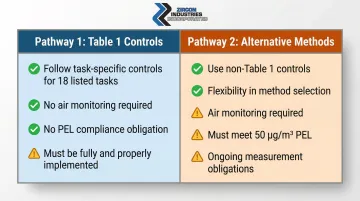
Pathway 1: Table 1 Specified Exposure Control Methods. Follow the engineering controls, work practices, and respiratory protection matched to each of the 18 listed tasks. Full, proper implementation exempts employers from air monitoring and PEL compliance obligations for those specific tasks.
Pathway 2: Alternative Exposure Control Methods Use engineering controls and work practices not specified in Table 1, but you must measure worker silica exposure through air monitoring and demonstrate compliance with the 50 μg/m³ Permissible Exposure Limit (PEL).
Baseline Requirements for All Employers
Regardless of which compliance pathway you choose, all construction employers covered by 29 CFR 1926.1153 must:
- Develop and maintain a written exposure control plan describing tasks, controls, housekeeping measures, and access restrictions
- Designate a competent person authorized to conduct frequent, regular inspections and take corrective action
- Follow restricted housekeeping practices—no dry sweeping or compressed air cleaning where safer alternatives exist
- Provide medical surveillance for workers required to wear respirators 30+ days per year
- Deliver task-specific worker training on silica hazards, controls, and health effects
- Keep records of exposure monitoring, objective data, and medical surveillance per 29 CFR 1910.1020
The Competent Person Role
The competent person designation is not a paperwork formality. This individual must be capable of identifying existing and foreseeable silica hazards in the workplace and have the authority to take prompt corrective measures to eliminate or minimize them.
Regular site inspections are required to verify:
- Engineering controls are operating properly
- Employees are following prescribed work practices
- Housekeeping measures remain in compliance
Understanding Table 1, the PEL, and the Action Level
Three exposure benchmarks drive compliance obligations under the silica standard.
Key Exposure Limits
Action Level (AL): 25 μg/m³ as an 8-hour TWA triggers monitoring and protective obligations when exposures may reach this level.
Permissible Exposure Limit (PEL): 50 μg/m³ as an 8-hour TWA sets the absolute maximum allowable worker exposure.
Table 1 Pathway: Allows employers to bypass air monitoring entirely if they correctly implement task-specific controls for 18 common construction operations.
How Table 1 Works in Practice
Table 1 pairs each task with required engineering controls and respiratory protection based on duration and location.
Example: Handheld Power Saw (Any Blade Diameter)
- Outdoors, ≤4 hours per shift: Use integrated water delivery system feeding the blade continuously. No respirator required.
- Outdoors, >4 hours per shift: Same water system, plus respirator with Assigned Protection Factor (APF) 10 minimum.
- Indoors or enclosed areas: Same water system, plus APF 10 respirator regardless of duration.
The standard covers 18 tasks total, addressing the most common silica-generating construction operations. OSHA enforcement guidance defines "fully and properly implemented" precisely: controls must be present, properly maintained, in correct operation, and workers must understand and use them.
If Table 1 controls are incomplete or improperly applied, the employer falls back to alternative exposure control methods — including air monitoring and PEL compliance.
Alternative Monitoring Pathway
Employers not using Table 1 must:
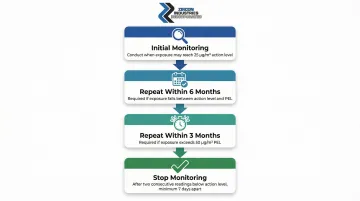
- Conduct initial air monitoring when employee exposure may be at or above the action level (25 μg/m³)
- Repeat monitoring within 6 months if exposures fall between the action level and PEL
- Repeat monitoring within 3 months if exposures exceed the PEL
- Stop monitoring after two consecutive measurements below the action level taken at least 7 days apart
When Exposures Exceed the PEL
If monitoring shows worker exposure above 50 μg/m³, employers must:
- Notify affected employees in writing within 5 working days
- Describe corrective actions being taken
- Implement engineering and work practice controls to reduce exposure
- Add respirators when engineering controls alone cannot bring exposure below the PEL
Respiratory Protection Requirements
When PEL exceedances require respirator use, three additional obligations apply:
- Respirators must meet Assigned Protection Factor (APF) requirements based on actual exposure levels
- All respirator use must be covered by an OSHA-compliant respiratory protection program under 29 CFR 1910.134
- Workers wearing respirators 30 or more days per year must receive medical exams at no cost to the employee
Practical Dust Control Methods That Meet OSHA Standards
OSHA prioritizes engineering controls and work practices over personal protective equipment because they provide more consistent, reliable protection.
The Hierarchy of Controls
OSHA wants you to control silica dust at the source first, and use respirators only as a last resort.
- Start with engineering controls: Wet cutting, local exhaust ventilation, and enclosed cabs with filtered air.
- Then look at work practices: Changing how materials are handled, adjusting processes, and keeping non-essential workers out of dusty zones.
- Respirators come last: Only when the first two categories can't get exposure low enough on their own.
This hierarchy reflects OSHA's preference for controls that eliminate or contain the hazard at its source rather than relying on workers to consistently use PPE correctly.
Wet Suppression Methods
Water-based dust suppression is the most common and widely approved engineering control for construction operations:
- Direct water sprays applied to cutting, grinding, or drilling surfaces during the task
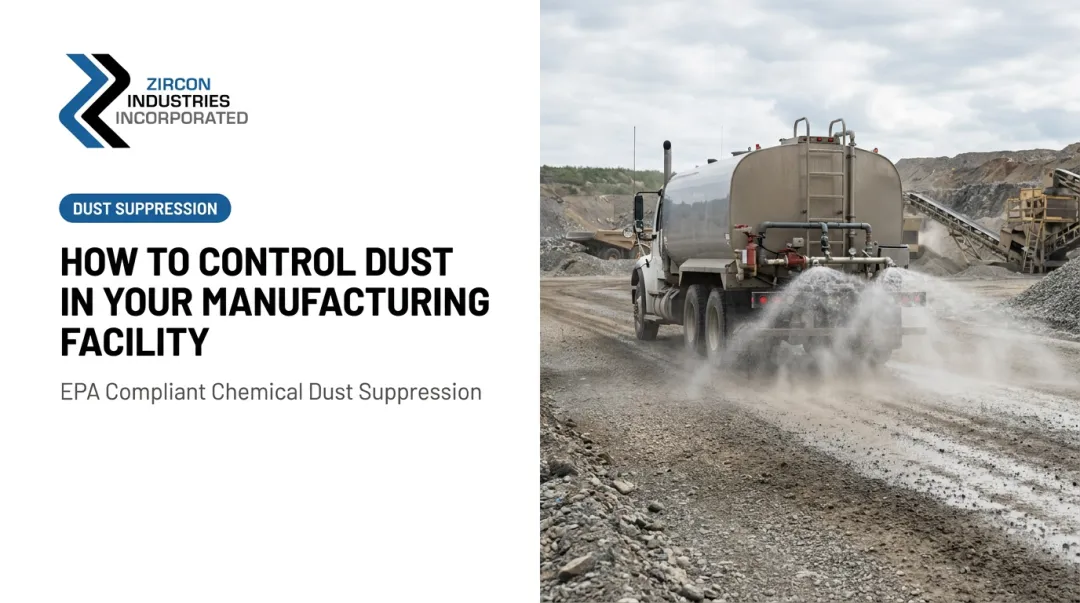
- Tank trucks with spray systems for haul roads, grading areas, and open work zones
- Water combined with surfactants (dust suppressant chemicals) for enhanced particle binding on milling tasks
- Atomized misting systems for large open areas with multiple dust sources
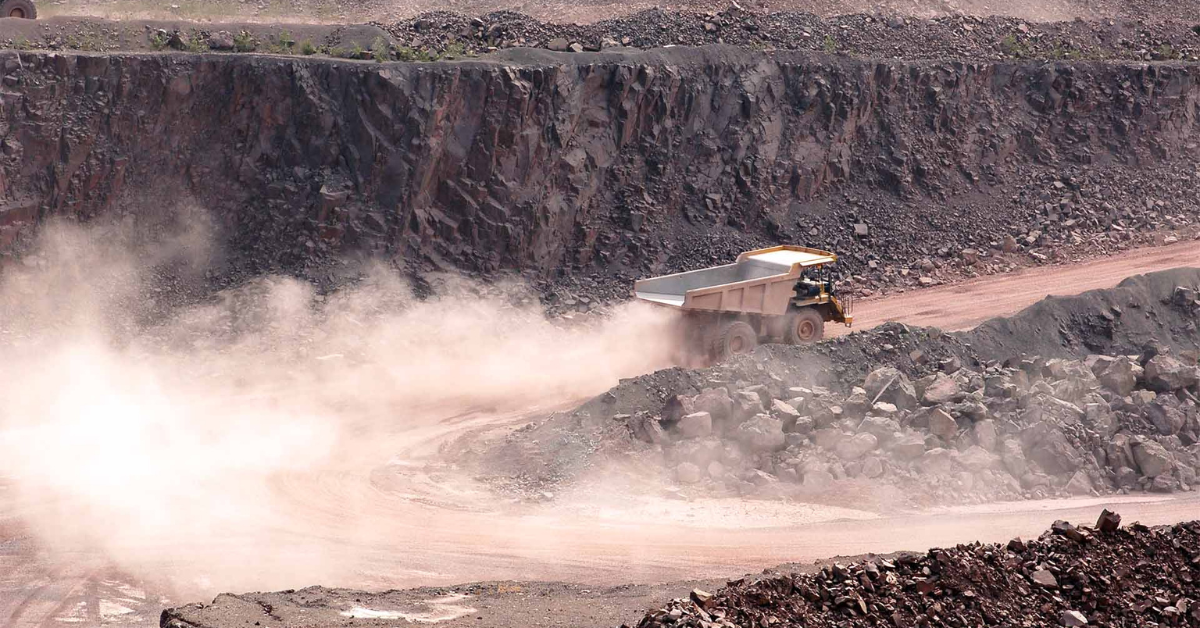
Water must be applied at rates sufficient to eliminate visible dust without creating mud hazards or slip risks. OSHA compliance officers will observe whether dust plumes are visible during operations—if visible dust escapes controls, expect scrutiny.
Dust Suppressant Chemicals
Adding surfactants or dust suppressant chemicals to water improves suppression effectiveness. Surfactants break water's surface tension, allowing better penetration and coverage while retarding evaporation. This makes suppression more durable, especially on haul roads and active grading sites where dust re-suspension is a recurring problem.
Table 1, row xviii specifically addresses heavy equipment used for grading and excavating (excluding demolition, abrading, or fracturing silica-containing materials). OSHA explicitly lists water and/or dust suppressants as the required engineering control for these operations—which is where chemical dust control products fit directly into compliance.
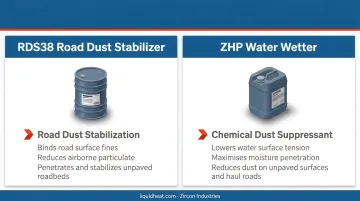
For operations looking to improve water-based dust suppression, Zircon Industries manufactures products that address both haul road dust and OSHA surfactant specifications.
- Haul road and site dust control: RDS38 Road Dust Stabilizer continuously draws moisture into the road base, controlling both existing dust and new particles stirred up daily by heavy traffic. It's reinvigorated by rain rather than washing out, and one application lasts 3 to 4 months. Zircon delivers and applies RDS38 as a turnkey service.
- Surfactant for water spray programs: ZHP Water Wetter is a non-ionic surfactant and resin extender designed to meet OSHA's milling machine dust control specification. Applied at a ratio of 1,500 to 3,000 parts water to 1 part surfactant, ZHP helps water spread and penetrate rather than beading off.
Beyond chemical suppression, certain equipment configurations carry their own OSHA specifications.
Enclosed Cab Requirements
When Table 1 requires an enclosed cab or booth for heavy equipment operators, it must meet strict specifications per 29 CFR 1926.1153(c)(2)(iii):
- Pressurized fresh air supply: A fan or blower system that keeps filtered air flowing into the cab at all times, maintaining positive pressure
- High-efficiency intake filter: MERV-16 rated or better, capturing 95% of particles in the 0.3 to 10.0 μm range
- Tight seals everywhere: Doors, windows, and gaskets all need to close properly with no visible wear
- Dust-free interior: The cab must be kept as clean as reasonably possible
- Climate control: Heating and cooling so operators don't prop open doors or windows
Modern heavy equipment often meets these specifications from the factory. Older machines may require retrofits including upgraded HVAC filters, door seal replacement, and positive pressure systems.
Housekeeping Controls
OSHA strictly prohibits dry sweeping and compressed air cleaning where silica exposure could result, unless no feasible alternative exists. HEPA-filtered vacuuming is the preferred method for removing settled dust from floors, equipment, and surfaces.
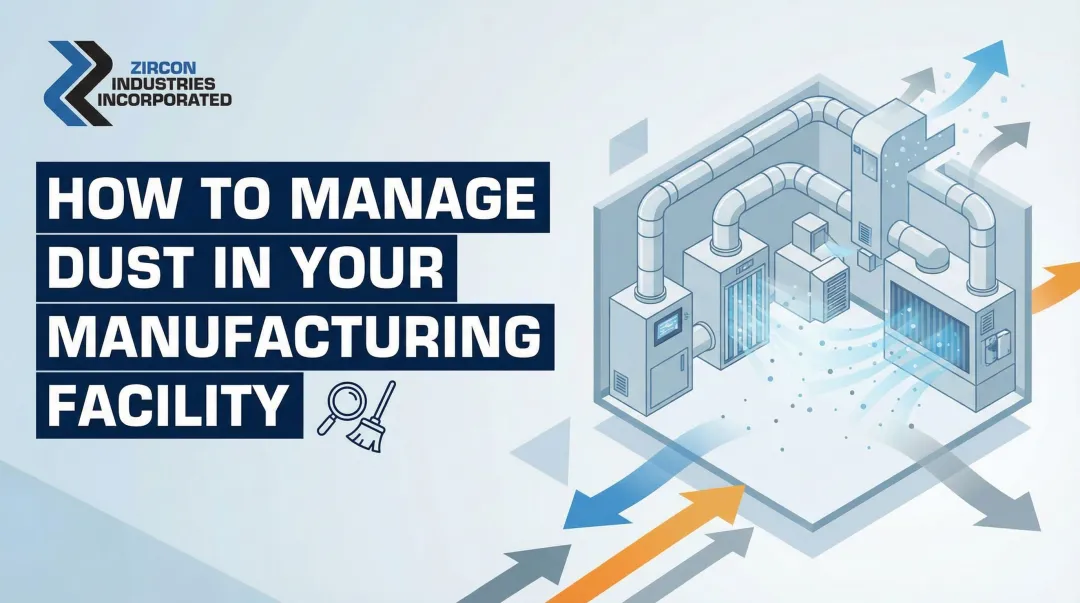
Indoors, adequate exhaust ventilation must prevent visible airborne dust from accumulating. If you can see dust settling on surfaces or hanging in the air, ventilation is insufficient.
How to Build a Written Exposure Control Plan
The written exposure control plan is more than a compliance document—it's an operational roadmap for silica management.
Four Required Elements
Under 29 CFR 1926.1153(g), the plan must cover four things:
- Description of tasks that involve silica exposure
- Engineering controls, work practices, and respiratory protection used for each task
- Housekeeping measures used to limit exposure
- Procedures to restrict access to high-exposure work areas, minimizing the number of workers exposed
Operational Requirements
The plan must be:
- Reviewed and updated at least annually
- Made available to employees, their representatives, and OSHA upon request
- Actively implemented by the designated competent person through regular site inspections
The competent person's job is to ensure the plan translates into actual dust controls on active work sites — not just a document that satisfies an audit.
Getting Started
Building a compliant plan can be challenging for smaller operations without a dedicated safety team. OSHA runs a free On-Site Consultation Program for exactly this situation.
State-employed consultants visit your site, review your silica program, and point out what needs fixing. The visits are confidential and won't lead to citations or fines. The only catch is you'll need to correct any serious hazards the consultant finds.
Medical Surveillance, Worker Training, and Recordkeeping
These three compliance pillars work together: medical exams catch early harm, training prevents it, and records prove you did both. OSHA treats failures in any one area as independently citable — meaning a recordkeeping gap can generate violations even when exposure levels are within limits.
Medical Surveillance Requirements
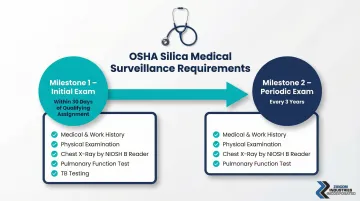
Any worker who wears a respirator under the silica standard for 30 or more days per year must be offered medical exams at no cost. Even a few minutes of respirator use in a shift counts as a full day toward that threshold.
Initial exam: Offered within 30 days of qualifying assignment
Periodic exams: At least every 3 years thereafter
Exam components:
- Medical and work history review
- Physical exam emphasizing the respiratory system
- Chest X-ray interpreted by a NIOSH-certified B Reader
- Pulmonary function test (FVC and FEV1) administered by a NIOSH-approved spirometry course certificate holder
- Testing for latent tuberculosis (initial exam only)
Employers receive a written medical opinion; employees receive a detailed medical report.
Worker Training Requirements
Every covered employee must be trained to demonstrate knowledge and understanding of:
- Health hazards associated with silica exposure
- Specific workplace tasks that could result in exposure
- Specific measures implemented to protect employees (engineering controls, work practices, respirators)
- Contents of 29 CFR 1926.1153
- Identity of the competent person
- Purpose and description of the medical surveillance program
Training must be task-specific and updated when conditions change, such as new equipment, modified processes, or different work locations.
Recordkeeping Obligations
OSHA requires employers to hold onto air monitoring data, objective exposure data, and medical records in line with 29 CFR 1910.1020. Medical and exposure files must stay on hand for at least 30 years. Training documentation needs to be kept for a minimum of 3 years. Missing records in any category can draw a separate citation under 29 CFR 1926.1153(j), independent of whether actual exposure levels were in range.
Air monitoring records must include:
- Date of measurement
- Task monitored
- Sampling and analytical methods used
- Sample results and number of samples
- Analyzing laboratory name and address
- PPE worn during monitoring
- Employee names and job classifications
OSHA inspectors review records independently of exposure results — a correctly formatted monitoring record with missing employee names or an unlisted lab address can trigger a citation on its own.
Frequently Asked Questions
How do you control dust on a construction site?
OSHA-compliant dust control combines wet suppression (water and dust suppressants), local exhaust ventilation, enclosed equipment cabs with MERV-16 or better filtration, HEPA-filtered vacuums, and proper housekeeping. Engineering controls take priority over respirators under OSHA's hierarchy because they reduce exposure at the source rather than depending on correct respirator fit and use each shift.
What are the OSHA requirements for silica dust?
29 CFR 1926.1153 requires employers to limit silica exposure by following Table 1 controls or monitoring against the PEL. Additional obligations include a written exposure control plan, a designated competent person, medical exams for workers wearing respirators 30 or more days per year, worker training, and recordkeeping.
What is the workplace exposure limit for silica dust?
The Permissible Exposure Limit is 50 μg/m³ as an 8-hour TWA. An action level of 25 μg/m³ triggers additional monitoring and protective obligations. Employers who correctly follow Table 1 aren't subject to the PEL for covered tasks, because full implementation of those controls is considered sufficient protection.
What is the new silica rule implemented in September 2017?
29 CFR 1926.1153 was finalized in early 2016, with construction enforcement beginning in 2017. It replaced outdated silica PELs with stricter limits and introduced Table 1 task-specific controls, written exposure control plans, medical surveillance, and worker training requirements.
How often does OSHA require silica testing?
Employers correctly following Table 1 are exempt from air monitoring. Those using alternative methods must monitor when exposure may reach the action level, repeating every 6 months if below the PEL and every 3 months if above it. Monitoring can stop after two consecutive readings below the action level taken at least 7 days apart.
Is dust an OSHA violation?
Dust alone isn't automatically a violation. Allowing workers to be exposed above OSHA's PELs, or failing to implement required controls, is citable. OSHA can also cite employers under the General Duty Clause for uncontrolled dust hazards, including combustible dust, where no specific standard applies.