Introduction
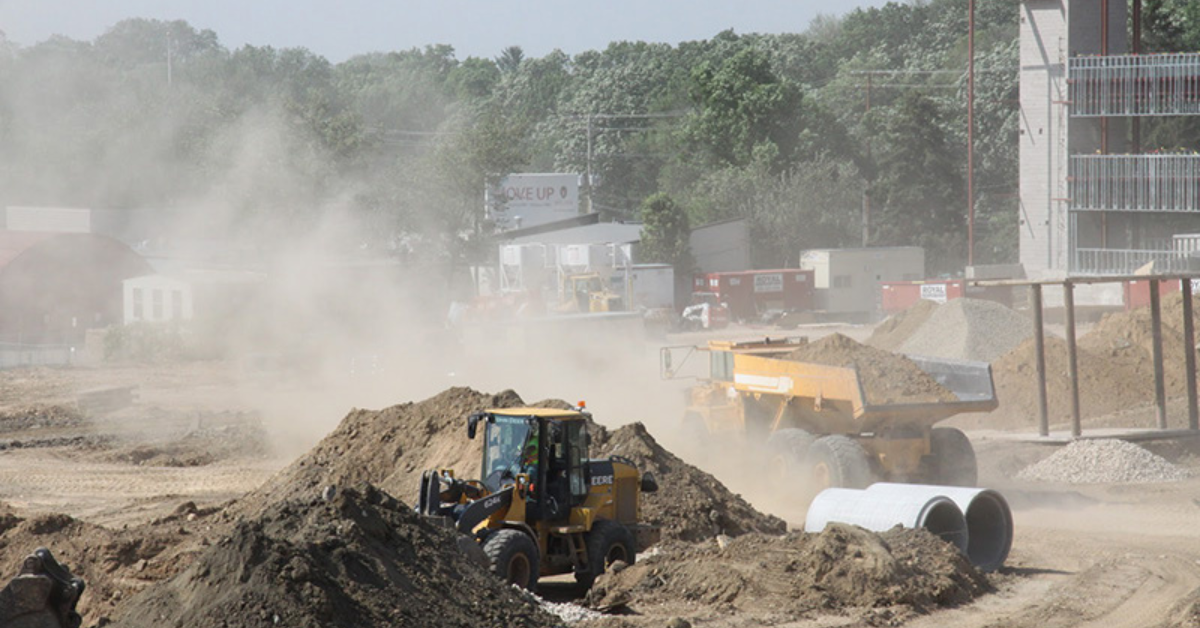
Fine particulate dust coating equipment surfaces, reduced visibility along walkways, workers coughing after every shift — these aren't minor nuisances. They're signs that a facility's dust problem is running the operation, not the other way around.
Unmanaged dust is a worker health hazard, an operational liability, and an active OSHA enforcement target. Roughly 2.3 million workers come into contact with respirable crystalline silica through their jobs, with the largest concentrations in construction, foundries, masonry, brickwork, and oil and gas operations.
The risks extend beyond lungs: combustible dust creates fire and explosion hazards, while abrasive particles accelerate equipment wear and drive up maintenance costs.
This guide covers the real risks of manufacturing dust, the most effective control methods, how chemical suppressants fit into a daily dust management strategy, and how to build a plan your facility can actually follow.
Key Takeaways:
- Manufacturing dust drives chronic respiratory disease, fire and explosion risk, and equipment wear, which is why OSHA treats it as an active enforcement priority.
- Effective control is layered: housekeeping and PPE, source capture (ventilation, dust collectors, enclosures), and chemical suppressants for surface dust.
- Chemical suppressants bind particles before they go airborne, making them well-suited to high-traffic floors, loading docks, transfer points, and outdoor stockpiles.
- OSHA enforces dust exposure through a mix of general-duty and substance-specific rules, with citations and penalties scaling by severity.
- A proper dust management plan needs source mapping, written controls, training records, and monitoring data on file to ensure compliance.
Why Dust is a Serious Problem in Manufacturing Facilities
Health Hazards for Workers
Prolonged exposure to fine particulate matter — including metal dust, silica, wood dust, and chemical powders — causes chronic respiratory diseases such as silicosis, asthma, bronchitis, and occupational lung disease. Respirable crystalline silica is classified as a Group 1 carcinogen by the International Agency for Research on Cancer, causing lung cancer, COPD, and kidney disease.
Health risks are not limited to workers in direct contact with the dust source. Research on welding fume distribution measured particle concentrations at 45 mg/m³ near the arc and 9 mg/m³ at 6.5 feet away, demonstrating that airborne particles travel throughout a facility and affect all employees in the space, not just those performing dust-generating tasks.
Wood dust carries similar risks. The IARC classifies wood dust as a Group 1 carcinogen, with oak and beech dust confirmed as human carcinogens and birch, mahogany, teak, and walnut among suspected carcinogens.
Metal dusts are no safer. Hexavalent chromium, nickel compounds, and beryllium are all confirmed human carcinogens, making exposure in metalworking environments a serious long-term health liability.
Safety Hazards: Fire and Explosion Risk
Certain manufacturing dusts — including wood, grain, metal, and coal — can ignite and cause explosions when suspended in air in a confined space at the right concentration. OSHA's combustible dust guidance identifies this as a critical safety hazard with regulatory consequences for facilities that fail to act.
The real danger lies in secondary explosions. A poorly maintained facility with dust accumulation on surfaces and equipment is at heightened risk of a chain reaction: a primary blast dislodges settled dust from floors, overhead structures, and equipment, triggering massive secondary explosions. Between 1980 and 2005, the U.S. Chemical Safety Board documented 281 combustible dust incidents resulting in 119 fatalities and 718 injuries.
Materials you might not expect can become explosive hazards:
- Metal dust (aluminum, magnesium, iron)
- Organic materials (sugar, flour, paper, dried blood)
- Plastic and phenolic resin dust
- Rubber and textile fibers
- Coal and carbon particles
Operational and Equipment Damage
Dust damages equipment in three distinct ways, each with real cost implications:
- Mechanical wear: Abrasive particles accelerate wear on motors, bearings, and conveyors. Bearing faults account for 41% of all motor failures in industry, with more than one-third of lubrication-related failures traced to contaminated lubricant.
- Electronics failure. Settled dust on control boards, sensors, and heat sinks holds moisture against the surface, creating conditions where leakage currents climb, and electrochemical corrosion takes hold. The result is intermittent faults, signal noise, and outright board failure long before the equipment's rated service life.
- Heat exchanger fouling: Dust buildup on heat exchange surfaces costs U.S. industries hundreds of millions of dollars annually in energy losses, maintenance, and production downtime.

The Most Effective Methods for Managing Dust in Manufacturing
No single method works in all scenarios. The most effective facilities combine two or more strategies based on the type and volume of dust generated. Dust management works best as a layered system — multiple controls reinforcing each other.
Housekeeping and PPE
Basic housekeeping protocols form the foundation of any dust management program:
- Use HEPA-filtered vacuums instead of dry brooms to avoid re-suspending particles
- Wipe down surfaces and machinery before and after every shift to prevent accumulation
- Collect and dispose of dust in sealed containers to prevent re-release
OSHA regulations specifically prohibit dry sweeping or dry brushing where it could contribute to respirable crystalline silica exposure, unless wet sweeping or HEPA-filtered vacuuming are not feasible.
Personal protective equipment (PPE) addresses individual protection:
- N-95 respirators for particulate filtration
- Safety glasses to protect eyes from airborne particles
- Protective garments to prevent skin contact and dust transfer
PPE is a complementary measure, not a root cause solution. It protects the individual worker but does nothing to control dust at the source or reduce overall facility contamination.
Ventilation Systems
Ventilation systems (wall-mounted or inline ducted) move contaminated air outside the facility. This approach works well when:
- Dust concentrations are moderate
- The dust type can be legally vented outdoors
- Environmental permits allow atmospheric discharge
However, ventilation is not appropriate when:
- Emissions exceed regulatory thresholds (often 5 tons per year for certain pollutants)
- Outdoor venting triggers environmental permit requirements
- Community nuisance complaints are likely
- The dust contains regulated substances requiring capture
Dust Collection Equipment
Industrial dust collection systems capture particulate at the source before it becomes airborne throughout the facility. Fabric filter baghouses typically achieve collection efficiencies exceeding 99%, while cartridge collectors achieve 99% to 99.9% efficiency for PM10 and PM2.5, with some designs capturing 99.999+% of submicron particulate.
Best applications for dust collectors:
- Welding stations and metal fabrication
- Grinding and sanding operations
- Cutting and sawing processes
- Material transfer points
- Any fixed manufacturing process generating predictable dust
Enclosures and Barriers
Physical enclosures limit dust spread to specific zones:
- Plastic curtain walls around welding booths
- Metal partitions separating grinding operations
- Containment tents for temporary high-dust activities
- Sealed rooms for powder handling
Enclosures make cleanup easier, protect the broader workforce from exposure, and reduce the volume of air requiring filtration or ventilation. They work best when combined with localized dust collection inside the enclosed area.
Chemical Dust Suppressants
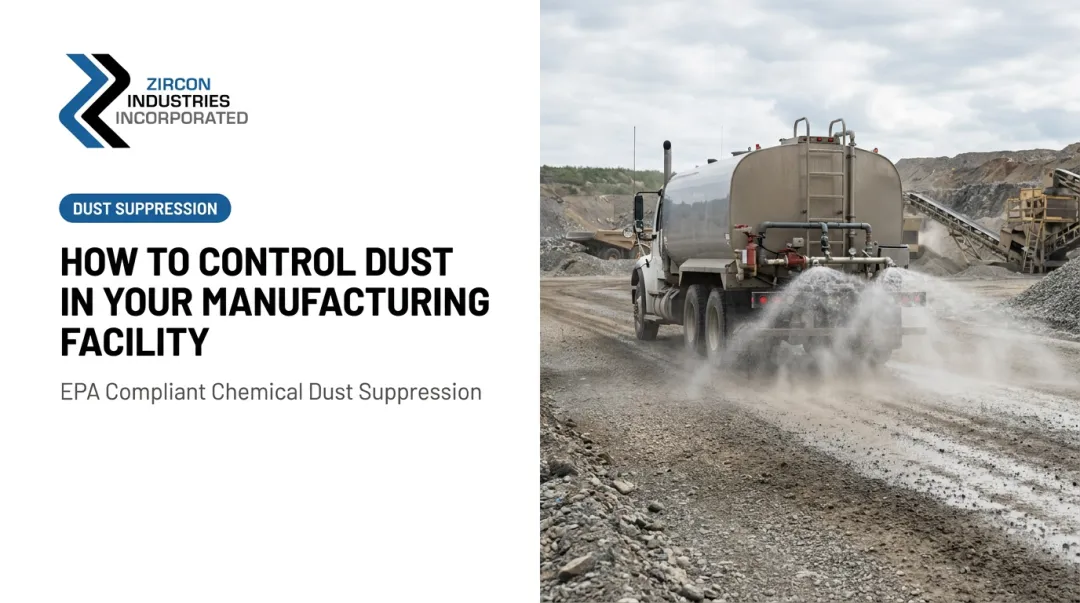
Chemical dust suppressants bind particles at the surface before they become airborne. Products such as polymers, surfactants, hygroscopic salts, and binding agents are applied directly to dust-prone surfaces, stopping particles from lifting under traffic, vibration, or air movement.
Most effective applications:
- Material handling zones and transfer points
- Aggregate or raw material stockpiles
- High-traffic floor areas
- Loading docks and staging zones
- Unpaved or gravel internal roadways
- Outdoor areas adjacent to the facility
Because product selection depends heavily on surface type, dust composition, and application frequency, chemical suppressants warrant a closer look — covered in the next section.
Chemical Dust Suppressants: A Powerful Tool for Daily Dust Control
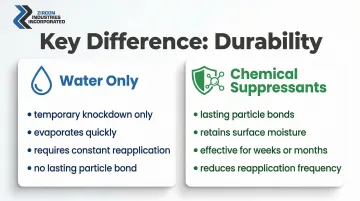
Chemical dust suppressants work by binding fine particles together at the surface, preventing them from becoming airborne through traffic, vibration, or air movement. Water application evaporates quickly and needs constant reapplication. Chemical suppressants, by contrast, provide ongoing daily control by suppressing both freshly generated and previously settled dust.
The key difference is durability. Water provides only temporary dust knockdown — once it evaporates, airborne particles return. Chemical suppressants create lasting bonds between particles or retain moisture in the treated surface, maintaining effectiveness for weeks or months depending on formulation and traffic levels.
Where Chemical Suppressants Add the Most Value
Manufacturing environments with high surface area and variable traffic see the greatest return:
- Unpaved or gravel internal roadways connecting buildings or material storage areas
- Loading docks where forklifts and delivery trucks generate continuous dust
- Material transfer points where aggregates, powders, or bulk materials are moved
- Raw material storage areas and outdoor staging zones adjacent to the facility
- Outdoor stockpiles of aggregate, coal, or other bulk materials
Choosing the Right Product for the Surface and Dust Type
Different surfaces and dust types call for different chemistries. Zircon Industries, an industrial specialty chemical manufacturer founded in 1970, builds its dust control line around four scenarios most plant managers run into.
- Asphalt milling and drilling: Respirable silica is the controlling concern, and water alone struggles to wet fine particles fast enough at the cut. ZHP Water Wetter is a non-ionic surfactant added to spray water at 1,500:1 to 3,000:1, formulated to meet the OSHA milling-machine dust control specification and lower the surface tension so water actually traps the particles instead of bouncing off.
- Unpaved roads and yards with daily traffic: Forklifts, haul trucks, and delivery vehicles kick up dust faster than a water truck can keep down. RDS38 is a road dust stabilizer that bonds the surface, holds for roughly three to four months per application, and reinvigorates with rain. RDS38 is offered turnkey, with delivery and field application handled by Zircon, and it's the only product in the line sold that way.
- Static stockpiles, open lots, and undisturbed surfaces: Wind, not traffic, is the problem here, which calls for a different chemistry. Latex 100 forms a clear crust on top of coal, iron ore, aggregate, fly ash, and open railcar loads, locking the surface against wind erosion. Best fit for piles that aren't being driven on or actively reclaimed.
- DIY unpaved-road dust control with environmental sensitivity: When the site sits near surface water, wetlands, or anywhere a runoff complaint could escalate, the suppressant chemistry has to be defensible. Glycerin DC-100 is biodegradable and rated as safe for aquatic life, which makes it the right fit for those locations and easy enough for in-house crews to apply without a contractor.
Sourcing runs through the Zircon Industries distributor network. Buyers can order through Fastenal, Motion Industries, Applied Industrial Technologies, or another industrial distributor carrying the line.
OSHA Compliance and Dust Regulations in Manufacturing
Excessive dust in a manufacturing facility can be — and frequently is — an OSHA violation. OSHA's General Duty Clause (Section 5(a)(1)) requires employers to maintain a workplace free from recognized hazards causing or likely to cause death or serious physical harm.
Specific OSHA Standards for Manufacturing Dust:
- Respirable Crystalline Silica (29 CFR 1910.1053): Establishes a permissible exposure limit (PEL) of 50 µg/m³ calculated as an 8-hour time-weighted average, with an action level of 25 µg/m³
- Combustible Dust National Emphasis Program (NEP): OSHA Directive CPL 03-00-008, effective January 30, 2023, targets facilities with combustible dust hazards
In Fiscal Year 2024, Respiratory Protection (29 CFR 1910.134) was the fourth most frequently cited OSHA standard with 2,470 violations, demonstrating that dust exposure control remains a top enforcement priority.
When OSHA identifies violations, the consequences escalate quickly based on severity:
Enforcement Actions OSHA Can Take:
- Citations for violations of specific standards or the General Duty Clause
- Financial penalties ranging from thousands to hundreds of thousands of dollars depending on violation severity
- Facility shutdowns in extreme cases where imminent danger exists
Avoiding those outcomes starts before an inspector arrives. OSHA inspectors look for evidence of a systematic dust control program, so your records need to tell a clear story:
Documentation Requirements:
OSHA inspectors look for evidence of a systematic dust control program:
- Written dust control plans describing tasks, engineering controls, work practices, and respiratory protection
- Regular monitoring results and air quality checks
- Training records showing all relevant personnel understand dust hazards and control measures
- Maintenance logs documenting cleaning schedules, equipment inspections, and corrective actions
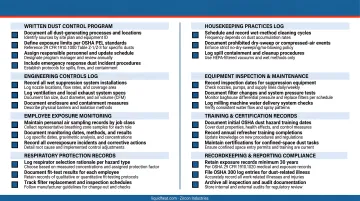
Facilities with complete, up-to-date documentation consistently fare better during inspections — and are better positioned to avoid repeat violations that carry steeper penalties.
How to Build a Dust Management Plan for Your Manufacturing Facility
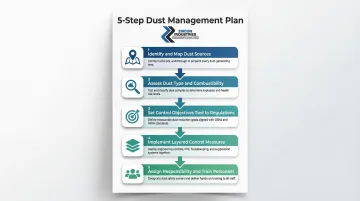
A comprehensive dust management plan consists of five essential components:
- Identify and Map All Dust Generation Sources
Walk through your facility and document every dust source:
- Every process that generates dust (grinding, cutting, welding, material handling)
- Transfer points where materials move between equipment or storage
- High-traffic areas where movement stirs settled dust
- Outdoor zones adjacent to the facility where dust can enter
- Assess Dust Type, Particle Size, and Combustibility
Not all dust carries the same risk. Characterize what you're dealing with before selecting controls:
- Material composition (silica, metal, wood, organic, chemical)
- Particle size distribution (respirable vs. larger particles)
- Combustibility classification per NFPA standards
- Toxicity and carcinogenicity based on IARC and ACGIH classifications
- Set Clear Control Objectives Tied to Regulatory Limits
Vague goals don't hold up during inspections or incident reviews. Set measurable targets:
- Meet or stay below OSHA PELs and action levels
- Eliminate visible dust accumulation on horizontal surfaces
- Reduce air quality complaints and respiratory symptoms
- Minimize combustible dust accumulation to safe levels
- Select and Implement Appropriate Control Measures
Layer your controls in order of effectiveness:
- Engineering controls first (dust collectors, ventilation, enclosures)
- Administrative controls second (housekeeping schedules, work practices)
- Chemical suppressants for surface and area dust control
- PPE as the final layer of protection
- Assign Responsibility and Train All Relevant Personnel
A plan without clear ownership fails in practice. Designate accountability at every level:
- Assign a dust control program manager or coordinator
- Train supervisors on monitoring and enforcement
- Educate all workers on dust hazards, control measures, and PPE use
- Document all training with dates, attendees, and topics covered
Ongoing Monitoring and Documentation
Once the plan is in place, consistent monitoring keeps it effective. Establish a routine schedule:
- Air quality checks at frequencies required by OSHA (quarterly, semi-annually, or annually based on exposure levels)
- Equipment inspections to verify dust collectors, ventilation, and filters are functioning properly
- Cleaning audits to confirm housekeeping protocols are being followed
- Incident tracking to document any dust-related health complaints, near-misses, or equipment failures
Keep detailed records of all monitoring results, corrective actions taken, and any incidents. This data is essential for regulatory compliance and for identifying when a control method is no longer effective.
Engage a Specialty Supplier Early
Manufacturing dust isn't a single problem. It's a stack of overlapping ones, including respiratory exposure, fire and explosion risk, equipment wear, electronics damage, and inspector scrutiny. The plants that handle it best run a layered program: source mapping, written controls, dust collectors and ventilation where they fit, chemical suppressants for surface and area dust, and clean documentation in case OSHA shows up.
If a recurring outdoor or material-handling dust problem is the missing piece, the Zircon Industries dust control line is built for those scenarios and is sold through an industrial distributor network. Find a local distributor carrying the line, or reach out directly with questions about your dust problem.
Frequently Asked Questions
How do you reduce dust in manufacturing?
Reducing manufacturing dust requires multiple controls working together. Source capture (local exhaust ventilation or a baghouse on dust-generating equipment) controls the bulk of it. Housekeeping protocols, workstation enclosures, and chemical suppression on floors and outdoor zones address the rest. The right combination depends on dust type, volume, and where it's generated.
What is the most effective method for manufacturing dust control?
The most effective method depends on the dust source. For fixed grinding, welding, or cutting operations, a properly sized source-capture collector delivers the strongest results. For unpaved roads, loading docks, and outdoor stockpiles, chemical suppression performs better because no collector reaches those surfaces. Most facilities combine both methods.
Do dust control systems work in manufacturing?
Yes, when sized and maintained correctly. Modern fabric filter baghouses run above 99% collection efficiency, and cartridge collectors with the right media reach 99.999% on submicron particles. Performance depends on filter condition, so a well-maintained smaller unit often outperforms a larger one with blinded filters.
Can excessive dust in manufacturing be an OSHA violation?
Yes, OSHA cites manufacturing dust hazards under the General Duty Clause, the Respirable Crystalline Silica standard, and the Combustible Dust National Emphasis Program. Penalties scale with severity, and repeat citations on the same hazard carry significantly higher fines.
What equipment is used for industrial dust control?
Industrial dust control equipment includes baghouse and cartridge dust collectors for source capture, local exhaust ventilation systems, HEPA-grade air filtration, misting and fog cannons for open areas, and chemical suppressant spray systems for floors and outdoor surfaces. Most facilities deploy two or three categories together, not just one.
What are effective dust control measures for a warehouse?
Warehouse dust differs from process-industry dust because it's finer, more distributed, and driven by forklift traffic rather than a fixed process. Effective measures include industrial vacuuming, HEPA air filtration near high-traffic aisles, curtained-off high-dust zones, and chemical suppression on concrete floors near loading docks and transfer points.