Introduction
Winter hits mining operations hard. Frozen conveyors, icy haul roads, and cold-related equipment failures can create productivity losses that compound quickly. Proactive winterization cannot eliminate every weather-related shutdown, but it can substantially reduce avoidable freeze-ups, unsafe conditions, and emergency maintenance. According to Rock Products’ analysis of conveyor downtime, operators at one major mine estimated that a single conveyor belt failure could cost between $6 million and $12 million. For operations under strict commodity supply contracts, missing production targets triggers severe financial penalties.
This guide covers what mines need to stay operational through winter:
- The major cold-weather challenges that cause unplanned downtime
- Equipment winterization steps before temperatures drop
- Freeze control strategies for conveyors and haul roads
- Worker safety protocols for extreme conditions
- A pre-season planning schedule to maintain production targets through Q1
Key Takeaways
- Year-round mine productivity depends on proactive winter preparation — not reactive fixes after the first freeze hits
- Frozen conveyors, icy haul roads, and hydraulic failures are costly yet preventable with structured winterization
- Start equipment winterization — fluids, batteries, heating systems — in early fall, before temperatures drop
- Automated freeze control systems cut manual de-icing labor, reduce product waste, and deliver reliable around-the-clock protection
- A documented pre-season checklist beginning in early fall helps reduce avoidable freeze-related shutdowns and gives maintenance teams time to correct problems before severe weather arrives.
Why Mines Can't Afford to Shut Down in Winter
Mining operations face intense economic pressure to maintain year-round output. Production and commodity-supply obligations may continue through winter. Depending on the specific offtake, supply, transportation, or customer agreement, missed production or delivery commitments may create financial, scheduling, or commercial consequences. Mine operators should evaluate those risks against the actual force-majeure, minimum-volume, take-or-pay, and delivery provisions in their contracts.
Winter shutdowns trigger cascading problems that compound quickly:
- Stockpile depletion disrupts customer supply chains and triggers penalty clauses
- Contractor penalties mount with every day of missed output targets
- Equipment restart costs spike when frozen or idle machinery requires extensive recommissioning
- Reputation damage with buyers who depend on reliable delivery schedules
Mines in northern U.S., Canada, and Arctic regions have developed proven strategies to operate continuously through extreme cold. As weather patterns become less predictable, operations in milder climates are increasingly adopting these same methods.
Consider the Red Dog mine in Alaska as a benchmark. Red Dog Mine in Alaska operates throughout the year and transports concentrate to port storage for shipment during the limited ice-free season. Alaska DEC’s Red Dog Mine overview describes an ice-free shipping window of approximately 100 days, illustrating how production, stockpiling, transportation, and seasonal export logistics must be coordinated separately.
Major Winter Challenges in Mine Operations
Winter introduces multiple, simultaneous challenges affecting surface infrastructure, underground conditions, equipment performance, and worker safety. Each requires its own mitigation strategy.
Haul Road Deterioration and Ice Accumulation
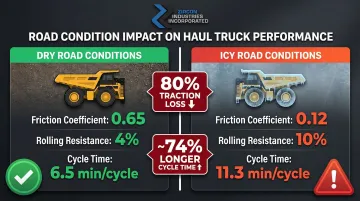
Freeze-thaw cycles destabilize haul road surfaces while snow and ice accumulation create serious traction and visibility hazards for heavy trucks. The Caterpillar Performance Handbook lists approximate traction factors as high as 0.65 for rubber tires on a quarry pit with a good floor and about 0.12 on ice. Actual traction depends on the tire, vehicle load, road condition, grade, temperature, contaminants, and site maintenance.
Higher rolling resistance increases truck travel time, fuel consumption, tire loading, and cycle cost. The actual production impact should be calculated using the mine’s truck model, payload, grade, route length, speed restrictions, road condition, and dispatch data rather than a universal cycle-time estimate.
For surface coal mines and surface work areas of underground coal mines, 30 CFR 77.1004 requires highwalls, banks, benches, and terrain sloping into working areas to be examined after each rain, freeze, or thaw before work resumes in the affected area. Surface metal and nonmetal mines should follow the separate requirements applicable to their mine type and conditions.
Conveyor Belt Freezing and Material Buildup
Conveyor systems represent one of the most vulnerable winter failure points. Carryback occurs when conveyed material remains attached to the return side of the belt and accumulates around rollers, pulleys, and the mainframe. According to Martin Engineering’s carryback guidance, this buildup can interfere with belt tracking and increase unscheduled downtime. In winter, moisture and freezing temperatures can make existing carryback and buildup problems more difficult to manage.
This buildup results in:
- Jammed systems and belt mistracking
- Torn belts requiring replacement
- Emergency stop switch activation
- Significant unplanned downtime
- Belt stiffening and cracking from cold temperatures, adding mechanical stress
Equipment Hydraulic and Mechanical Failures
Cold temperatures cause hydraulic fluids to thicken dramatically. Cold temperatures increase hydraulic-fluid viscosity, which can restrict inlet flow, increase pressure losses, delay component response, and contribute to pump cavitation. The Parker pump manual gives a 5 in Hg inlet-vacuum guideline for the pump series it covers. Mine operators should use the viscosity, warm-up, inlet-pressure, and fluid limits specified by the equipment and hydraulic-component manufacturers.
Extreme cold can stiffen hose compounds and reduce flexibility, increasing the risk of cracking or failure when hoses are flexed, pressurized, or exposed to impact. Inspect hoses for stiffness, surface cracks, leakage, damaged covers, and fitting problems, and confirm that each hose assembly is rated for the site’s minimum operating temperature.
Cold temperatures compound these problems across the powertrain:
- Battery output: drops to 40% of rated capacity at 0°F (-18°C) for lead-acid batteries
- Engine cranking load: increases as cold-thickened oil resists starter motor torque
- Hydraulic hose integrity: at risk of cracking under shock loads below -40°C
Winter Atmospheric Hazards in Underground Coal Mines
In underground longwall coal mines, changes in barometric pressure can alter the pressure relationship between mined-out gob areas and active mine workings, allowing methane-bearing gases to move toward surrounding entries. NIOSH research on barometric-induced gob breathing notes that abrupt pressure changes during adverse weather can increase this risk and that serious explosions have historically occurred more frequently during stormy late-fall and winter conditions.
Cold, dry air creates a second underground risk: coal mine dust explosions increase in winter because low-moisture air dries out the mine. Drier coal dust disperses more easily and ignites at lower concentrations. MSHA 30 CFR 75.403 requires underground coal mines to maintain incombustible content of at least 80%, increasing by 0.4% for each 0.1% of methane present.
Worker Cold Stress and Reduced Visibility
Cold exposure can impair physical performance, manual dexterity, attention, and decision-making, but the degree of impairment varies with temperature, wind, exposure duration, clothing, workload, acclimatization, and the individual worker. Sites should therefore treat cold stress as both a health hazard and a potential human-performance risk.
The operational risks stack quickly:
- Hypothermia and frostbite threaten workers exposed during equipment checks, fueling, and outdoor tasks
- Reduced daylight hours shrink the window for safe surface operations
- Vehicle-pedestrian incidents — a leading cause of mining fatalities — increase as snow and ice limit sightlines
- Slower reaction times raise equipment accident risk at exactly the moment conditions demand precision
How Mines Winterize Equipment and Infrastructure
Effective winterization is a pre-season process — completed before the first freeze — that spans fluid systems, heavy equipment, surface infrastructure, and worker safety. Miss the window and you're reacting to failures instead of preventing them.
Fluid and Lubricant Upgrades
Hydraulic oils, engine lubricants, and coolant blends must be switched to low-temperature-rated formulations before winter. Critical fluids to change include:
- Hydraulic fluid: Switch to synthetic base stock oils rated for your coldest expected ambient temperature
- Engine and powertrain fluids: Select oil separately for each engine, transmission, differential, final drive, and hydraulic compartment using the equipment manufacturer’s temperature chart. For example, the referenced Caterpillar fluid guide lists SAE 0W-40 for certain engine crankcases at very low temperatures, while SAE 0W-20 appears in some transmission or hydraulic applications. Do not transfer one compartment’s oil recommendation to another.
- Gear oil: Replace with low-viscosity winter formulations
- Diesel cold-flow preparation: Confirm the fuel’s cloud point, cold-filter-plugging point, seasonal grade, storage conditions, and equipment requirements. Use only fuel-supplier- and OEM-approved cold-flow additives at the specified dosage, and install or inspect fuel heaters and water-separation systems where required.
Skip this step and fluid thickens to the point where it fails to fill sealing and lubrication gaps — leading to metal-to-metal contact and pump failure.
Battery Maintenance and Cold-Start Preparation
Battery capacity drops significantly in cold temperatures, while cranking requirements increase. Pre-season battery preparation includes:
- Battery testing: Use the equipment or battery manufacturer’s approved load-test or conductance-test procedure. If a 15-second load test is used, apply the specified load and compare the final voltage against the temperature-compensated pass/fail chart rather than using one universal voltage threshold.
- Insulated battery wraps or block heaters: Install on all critical equipment
- Charging schedules: Maintain batteries fully charged; keep them warm with heaters set between 21°C and 32°C (70°F to 90°F)
- Replacement: Replace any battery failing load tests before winter begins
Conveyor and Processing Equipment Weatherproofing
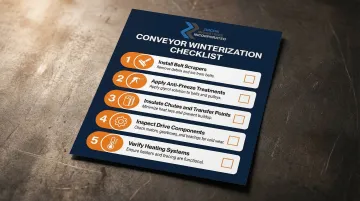
Specific winterization steps for conveyor systems include:
- Install or replace belt scrapers to remove material before it freezes
- Apply anti-freeze treatments to belt surfaces using automated spray systems
- Insulate chutes and transfer points to prevent ice buildup
- Inspect drive components for wear that cold will accelerate
- Verify heating systems on critical components are operational
Haul Road and Surface Infrastructure Preparation
Grade and pre-treat haul roads before winter using these steps:
- Complete final grading to establish proper drainage patterns
- Stockpile sand and gravel for traction application throughout winter
- Set up drainage systems to reduce freeze-thaw surface damage
- Establish snow removal protocol with equipment and personnel assignments
- Pre-position equipment (plows, graders, sanders) near high-priority routes
Heating Systems, Shelter, and Worker Infrastructure
Heated maintenance bays, operator cab heating, and warming stations near active work zones keep crews safe and productive throughout a winter shift. OSHA’s cold-stress guidance recommends training workers, scheduling frequent short breaks in warm and dry areas, planning demanding work during warmer parts of the day, using buddy systems, and providing suitable engineering controls and protective clothing. Mine operators should incorporate these practices into their MSHA-compliant site procedures and determine warming-location access and break frequency through a site-specific cold-stress assessment.
Freeze Control for Conveyors and Haul Roads
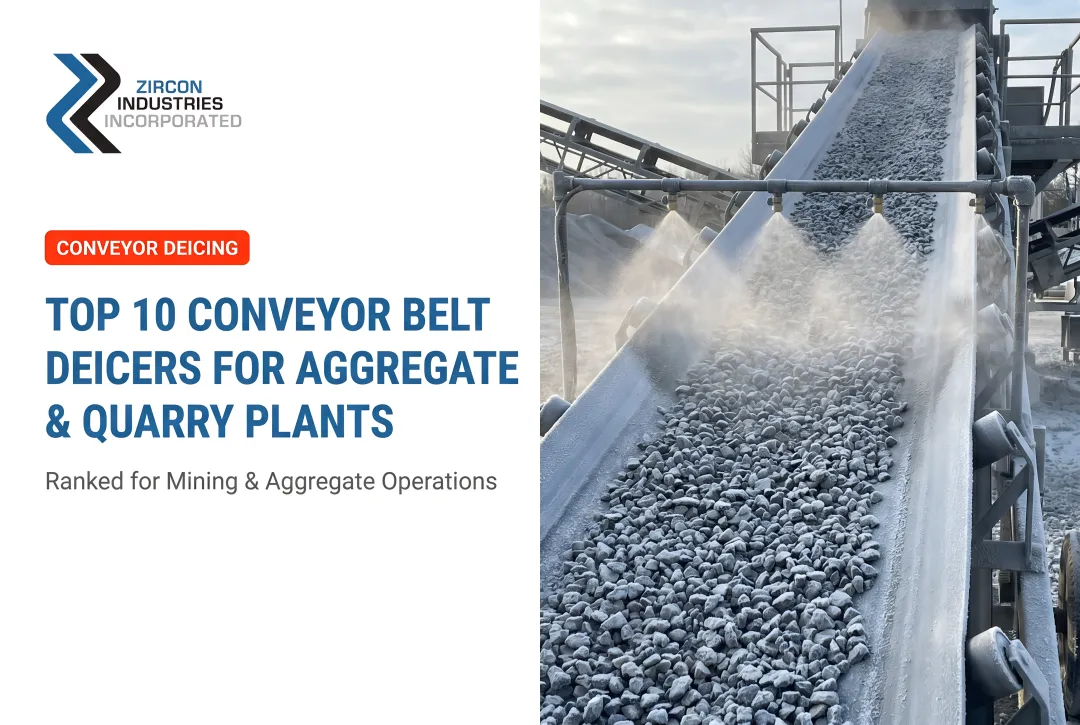
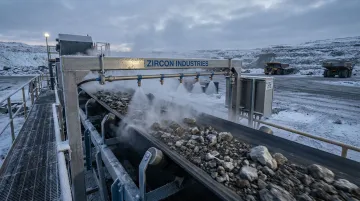
One of the most persistent and costly winter problems in surface mining and aggregate operations is conveyor belt icing. Belts that freeze mid-operation cause jams, material spillage, and belt damage that can shut down processing for hours. Manual de-icing is labor-intensive, inconsistent, and exposes workers to injury risk.
Automated deicer spray systems can improve application consistency by activating according to programmed temperature settings and applying product only when belt movement is detected. This helps reduce manual variability and unnecessary spraying, but the system still requires correct installation, calibration, inspection, replenishment, and maintenance.
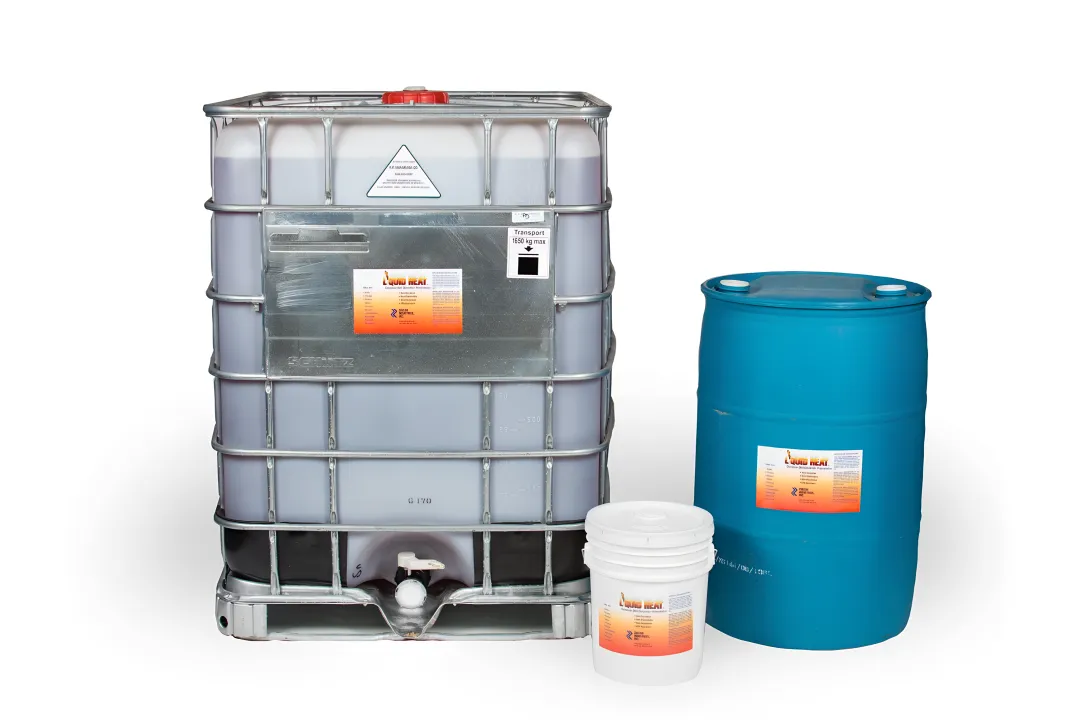
Liquid Heat Conveyor Belt Deicer is designed for belts, rollers, idlers, chutes, switches, truck beds, and other freeze-prone bulk material handling surfaces. Backed by 55+ years of Zircon Industries’ specialty chemical experience, it can be applied through automated systems or manual sprayers for mining, aggregate, coal, cement, steel, recycling, and other industrial operations.
Key operating features of these systems:
- Apply chemistry only when the belt is in motion, preventing product waste during idle periods
- Adjust spray frequency via programmable temperature zones based on actual field conditions
- Run more frequent cycles in severe cold and reduce application in milder temperatures
- Require minimal operator input once installed and calibrated
Haul Road Ice Control Strategy
Haul road ice control benefits significantly from liquid deicer applications, but strategy matters. Anti-icing (pre-treatment before freezing) is more effective and cost-efficient than de-icing (treating after ice has formed). Breaking an ice bond requires roughly five times more energy than preventing one from forming.
Pre-treatment can help prevent or weaken ice bonding before a storm, making subsequent plowing and surface maintenance more effective. Results on mine haul roads depend on road material, pavement or aggregate type, drainage, temperature, traffic, grade, product chemistry, application rate, runoff controls, and equipment. Validate the program through site trials rather than applying a universal percentage reduction in chemical passes.
Mines operating in the U.S., Canada, and European countries with cold-weather aggregate operations now include chemical freeze control programs in their standard winter budgets. For most operations, the cost of a full-season freeze prevention program runs well below a single day of unplanned conveyor downtime.
Winter Safety Protocols and Compliance
MSHA requirements vary by mine type and work area:
- For surface metal and nonmetal mines, 30 CFR 56.11016 requires regularly used walkways and travelways to be sanded, salted, or cleared of snow and ice as soon as practicable.
- For surface coal mines and surface work areas of underground coal mines, 30 CFR 77.1004 requires examinations of highwalls, banks, benches, and terrain after each rain, freeze, or thaw before work resumes in affected areas.
- For underground coal mines, 30 CFR 75.403 sets rock-dust incombustible-content requirements and adjustments based on methane concentration.
Operators should build their winter compliance checklist around the regulations that apply to their specific mine classification and activities.
Worker Protection Against Cold Stress
Site compliance covers surfaces and ventilation — but protecting workers from cold stress requires a separate set of protocols. OSHA and NIOSH recommend scheduling frequent short breaks in warm, dry areas, assigning heavy work to the warmest part of the day, and using the buddy system for cold stress monitoring.
Workers should layer up: insulated jackets, gloves, hats, and waterproof boots at minimum.
Critical worker safety measures include:
- Layered PPE appropriate for temperature range and wind conditions
- Active monitoring for early signs of hypothermia and frostbite among co-workers
- Hydration requirements (cold stress dehydrates workers even when they don't feel thirsty)
- Building warm-up breaks into shift schedules rather than leaving them to worker discretion
- Use an approved work/warm-up schedule that accounts for air temperature, wind speed, workload, clothing, exposure time, and worker condition. Do not assign a maximum work period based on wind chill alone. Supervisors should shorten exposure periods whenever workers show symptoms, clothing becomes wet, wind increases, or the task limits movement.
Pre-Season Safety Training
Winter safety training should be completed before the first freeze, covering:
- Cold stress recognition and first aid response
- Ice and slip hazard awareness
- Vehicle operation in snow and reduced visibility
- Exhaust leak inspection for idle equipment (carbon monoxide risks increase in winter)
- Emergency response protocols for extreme weather events
Winter Mine Operations Planning Schedule
Effective winter mining operations depend on a structured pre-season planning timeline. Mines that start preparation in early fall avoid the costly scramble that comes when the first hard freeze hits unprepared equipment and roads.
Early Fall (September-October):
- Switch all equipment to winter-grade fluids (hydraulic oil, engine oil, coolant)
- Conduct battery load testing; replace failing units
- Complete equipment inspections focusing on seals, hoses, and hydraulic components
- Stockpile freeze control chemicals, sand, and gravel
- Procure and install automated deicer systems
- Train personnel on winter safety protocols
Pre-Freeze (Late October-November):
- Apply anti-icing treatments to haul roads
- Complete conveyor winterization (belt scrapers, insulation, spray systems)
- Verify all heating systems operational (maintenance bays, warming stations, operator cabs)
- Set up warming stations near active work zones
- Conduct final safety training and drills
Active Winter (December-March):
- Daily haul road clearing checks and traction application
- Weekly conveyor and equipment inspections
- Ongoing worker cold stress monitoring
- Deicer system verification and refill
- Document failures and response times for the April review
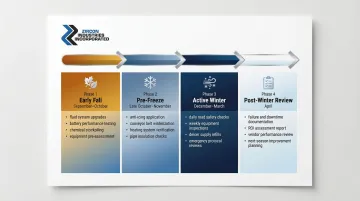
Post-Winter Review (April):
- Document what failed and why
- Update protocols based on lessons learned
- Assess total winter operational costs
- Identify ROI from proactive measures vs. reactive responses
- Plan improvements for next season
High-usage operations running continuous shifts need more frequent inspection cycles than seasonal sites. The mines that come out of winter with the strongest ROI numbers are those that built chemical restocking and deicer system maintenance into their Active Winter routine — not just their pre-season checklist.
Conclusion
Winter is a predictable challenge, not an unmanageable one. Mines that invest in pre-season preparation, the right freeze-control chemistry, proper equipment winterization, and strong safety protocols outperform those that treat winter as an annual emergency.
The right products, systems, and schedules protect both people and production. Mine sites that build a structured winter operations plan before temperatures drop consistently avoid the downtime, safety incidents, and contract penalties that hit unprepared competitors hardest. The three habits that separate them:
- Start winterization in early fall — not when the first freeze hits
- Use properly calibrated automated freeze-control systems where appropriate to improve application consistency and reduce manual variability and unnecessary product use.
- Maintain strict inspection schedules throughout the season to catch problems before they escalate
Frequently Asked Questions
Can you mine in the winter?
Yes, mines operate year-round in most climates. Cold weather requires additional preparation and adapted techniques, but does not require shutting down operations. Mines in Arctic regions like Alaska's Red Dog mine demonstrate that continuous winter production is both technically feasible and economically necessary.
Is mining a seasonal job?
While some smaller surface or sand mines may reduce activity in severe winter conditions, the majority of mining operations—particularly hard rock, coal, and aggregate—operate year-round with adapted protocols. Commodity contracts and supply chain commitments do not pause for weather.
Are mines warm or cold?
Underground mine temperatures are often more stable than surface temperatures, but conditions vary by depth, geology, ventilation, water inflow, equipment heat, and intake-air temperature. Surface facilities, portals, shafts, travelways, and exposed equipment may still require extensive winter controls.
Why do people mine in the Arctic?
The Arctic contains significant concentrations of valuable minerals and metals. While operational challenges are extreme, modern winterization technology, logistics planning, and freeze-control systems justify the operational cost—with strategic stockpiling enabling maximum use of brief summer shipping windows.
What happens to metal in winter?
Cold temperatures increase hydraulic-fluid viscosity, reduce battery output, stiffen some seals and hose compounds, and can reduce toughness in certain metals and alloys. The actual effect depends on the material, fluid grade, component design, warm-up procedure, and manufacturer-rated operating temperature.
How does climate change affect mining?
Climate change creates less predictable winter conditions—including unexpected late freezes, freeze-thaw cycles in traditionally mild areas, and more intense storms. This makes flexible, proactive winter planning more important than ever for mine operators across all regions, not just historically cold climates.