Introduction
Hydraulic oil does not always stay where it belongs. Leaks, spills, and residue can build up on cylinders, hoses, floor pads, painted panels, and surrounding equipment during every shift, whether you run a mining fleet, a construction crew, or a manufacturing line.
Choosing the wrong cleaner can create more work by affecting seals, coatings, or sensitive metals, or by leaving a slippery film on the shop floor.
Hydraulic oil is different from ordinary surface dirt. Its oily base and additive package can leave a persistent film that traps dust and grime, making water alone ineffective for complete cleanup.
This guide compares five degreaser options for hydraulic oil residue, explains the selection criteria that matter, and helps maintenance teams match the cleaner to the equipment, surface, cleaning method, and workplace requirements.
Key Takeaways
- Match the degreaser to the oil load, surface material, cleaning method, and equipment manufacturer's guidance.
- Solvent and water-based industrial degreasers remove oil through solvency, emulsification, or a combination of both.
- Zircon Industries' Z99 Safety Solvent Degreaser dissolves grease, oil, and tar on engine parts, motors, bearings, gears, and production machinery, then self-evaporates without leaving a residue film.
- Zircon's current safety data sheet classifies Z99 as a Category 3 flammable liquid with a 142 degree F flash point, a suspected carcinogen, and a skin sensitizer; it requires a well-ventilated area, ignition control, and keeping the product off plastics.
- Review the exact product label and SDS for PPE, ventilation, storage, flash point, and disposal instructions before use.
Overview of Degreasers in Hydraulic Equipment Maintenance
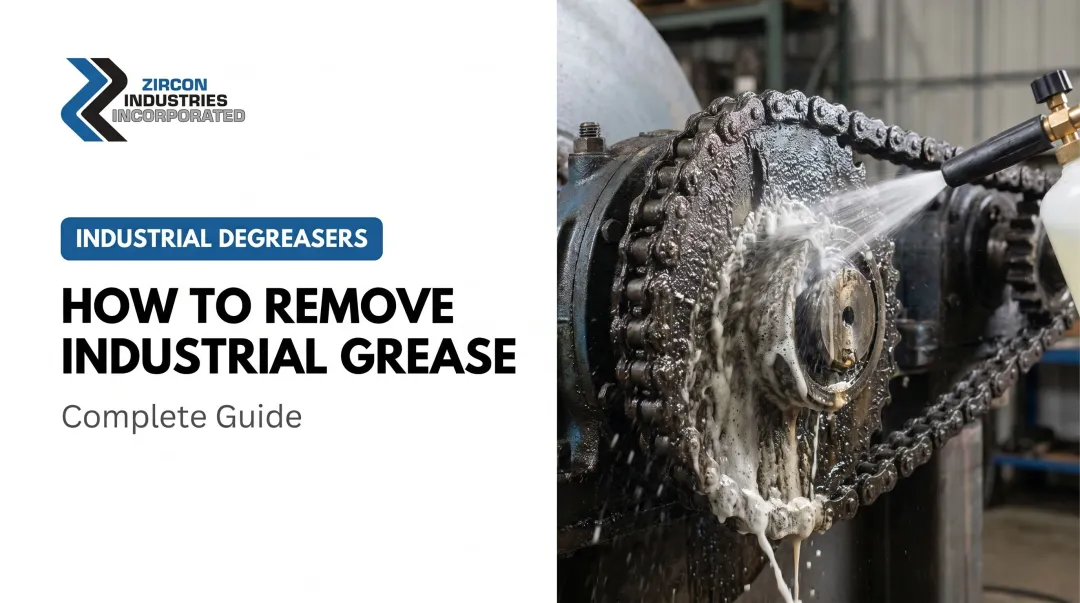
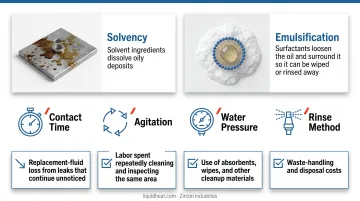
A hydraulic oil degreaser removes residue through solvency, emulsification, or both. Solvent ingredients dissolve oily deposits, while surfactants loosen the oil and surround it so it can be wiped or rinsed away. The right contact time, agitation, water pressure, and rinse method can improve results on heavier buildup.
Clean equipment surfaces make it easier to locate leaks, inspect hoses and fittings, confirm repairs, and maintain safer walking and working areas. Prompt cleanup can also reduce:
- Replacement-fluid loss from leaks that continue unnoticed
- Labor spent repeatedly cleaning and inspecting the same area
- Use of absorbents, wipes, and other cleanup materials
- Waste-handling and disposal costs
Below, we compare five practical degreaser options by formulation, supported applications, handling requirements, and compatibility considerations.
Top 5 Best Degreasers for Hydraulic Oil
These options address different cleaning conditions, from routine oil film on water-safe surfaces to heavier deposits on industrial equipment, engines, shop floors, and metal parts.
Zircon Industries' Z99 Safety Solvent Degreaser
Zircon Industries has manufactured industrial specialty chemicals since 1970. Its Z99 Safety Solvent Degreaser dissolves grease, oil, tar, and other soils on documented applications that include engine parts, motors, windings, bearings, gears, relays, generators, starters, and production machinery. Those uses make it a practical option for hydraulic oil residue on compatible equipment, pumps, cylinders, and removable parts.
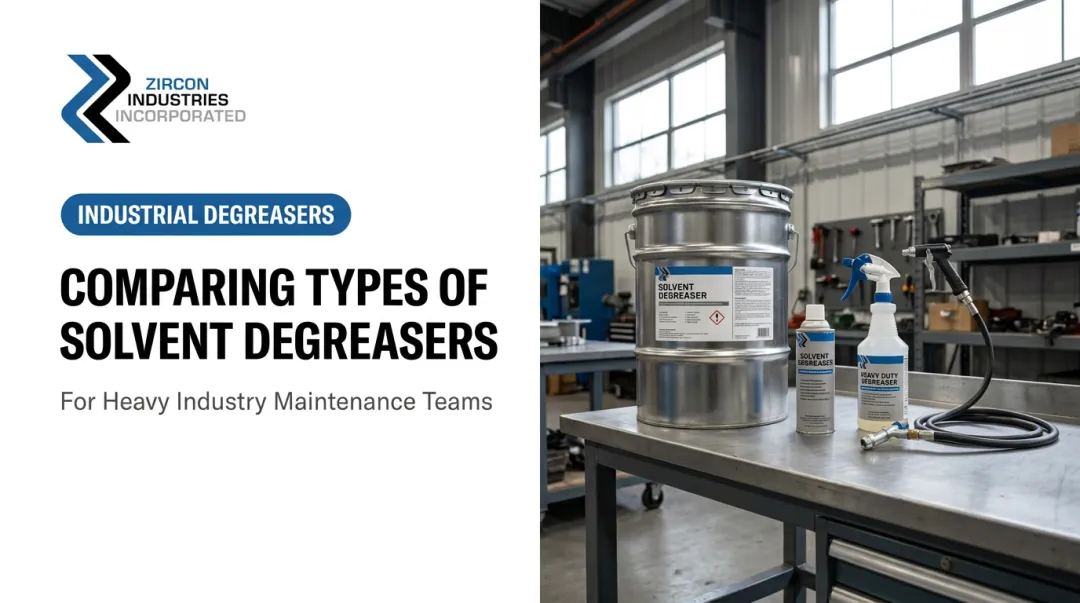
Z99 is a synthetic solvent supplied ready to use rather than a concentrate to be diluted. It penetrates and dissolves the oily film, and the aerosol format adds a flush-action valve that drives loosened residue off the surface. The solvent then self-evaporates and leaves no film behind, which helps when a technician needs to trace a leak back to its fitting immediately after cleaning.
| Attribute | Details |
|---|---|
| Formulation | Non-conductive, self-evaporating solvent. The bulk grade is a blend of hydrotreated light petroleum distillates and tetrachloroethylene; the aerosol is predominantly tetrachloroethylene |
| Best Use Case | Hydraulic oil residue, grease, and tar on engine parts, motors, bearings, gears, production machinery, and industrial equipment |
| Safety Profile | Current SDS (V7.0, March 2026): Category 3 flammable liquid, flash point 142 degrees F, suspected carcinogen, skin sensitizer. Dielectric to 36,000 volts under ASTM D-877. Requires ventilation, ignition control, and the PPE the SDS specifies |
Z99 is available in 5-gallon pails, 55-gallon drums, and 12 x 20-ounce aerosol cases. It is approved for industrial use in all 50 U.S. states and is GSA Canadian Compliant.
Four material limits matter on hydraulic equipment in particular. Z99 may remove some paints, so pretest painted panels and guards before broad application. The label instructs users not to apply it to plastics, which rules out polycarbonate guards, sight glasses, and reservoir windows. Zircon's technical sheet lists viton and elastomers among supported materials, but hydraulic systems mix seal compounds, so confirm your specific hoses and seals rather than assuming coverage.
The fourth is the one most often missed. Zircon's substrate list covers steel, chrome, copper, and brass, but not aluminum — and chlorinated solvents carry a documented incompatibility with aluminum, magnesium, and zinc. Plenty of hydraulic systems use cast-aluminum pump housings and valve bodies. Identify those components before you spray, keep the product to the steel cylinders, lines, fittings, and shop surfaces it is documented for, and clear any aluminum application with Zircon first.
Crystal Simple Green Industrial Cleaner & Degreaser
Crystal Simple Green Industrial Cleaner & Degreaser is a concentrated, water-based cleaner for water-safe surfaces. Its dilution guidance specifically includes hydraulic fluids, oils, metalworking fluids, dirt, and grime at 1 part product to 15-30 parts water for medium cleaning.
For heavier oil, grease, carbon, soot, or baked-on soil, the manufacturer recommends a stronger dilution of up to 15 parts water. Agitation or a second application can help with heavily impacted deposits.
| Attribute | Details |
|---|---|
| Formulation | Concentrated, water-based, non-flammable, non-caustic, and non-abrasive cleaner |
| Best Use Case | Light to moderate hydraulic oil residue on water-safe equipment, parts, floors, and shop surfaces |
| Safety Profile | Clean-rinsing formula for water-safe surfaces; follow the product label and SDS for site-specific handling requirements |
Krud Kutter Original Cleaner & Degreaser
Krud Kutter Original Cleaner & Degreaser is a water-based, biodegradable concentrate that removes grease and oil from tools, machinery, equipment, engines, and other compatible surfaces. It contains no bleach, ammonia, or hazardous solvents.
The product can be used full strength for heavy cleaning or diluted for general maintenance. For engines, the manufacturer instructs users to work on a cold, dry surface. Test the cleaner in an inconspicuous area before expanding the application.
| Attribute | Details |
|---|---|
| Formulation | Water-based, biodegradable concentrate without bleach, ammonia, or hazardous solvents |
| Best Use Case | Routine oil and grease cleanup on compatible tools, machinery, equipment, engines, and shop surfaces |
| Safety Profile | Test before use, follow the label and SDS, and avoid applications excluded by the manufacturer, including varnished surfaces and leather |
Purple Power Industrial Strength Cleaner/Degreaser
Purple Power Industrial Strength Cleaner/Degreaser is a concentrated, water-based cleaner that removes grease, dirt, and oil from compatible industrial equipment. It is non-abrasive, non-flammable, phosphate-free, and contains no solvents or silicones.
Purple Power can be used in parts washers and pressure washers with the manufacturer's recommended dilution. Because hydraulic equipment may combine painted panels, aluminum or stainless-steel components, plated metals, rubber hoses, and seals, confirm that every exposed material falls within the product's application guidance before cleaning.
| Attribute | Details |
|---|---|
| Formulation | Concentrated, water-based cleaner with no solvents or silicones; non-abrasive, non-flammable, and phosphate-free |
| Best Use Case | Grease, dirt, and oil on compatible industrial equipment and durable hard surfaces |
| Safety Profile | Follow the SDS and the manufacturer's material restrictions for aluminum, stainless steel, painted clear coats, chrome, copper, and rubber |
Citrus/Solvent-Based Degreasers (such as d-Limonene blends)
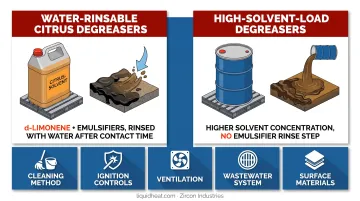
Citrus-solvent degreasers use d-Limonene or other citrus terpenes to dissolve heavy oil, grease, tar, and similar soils. Water-rinsable products combine that solvency with emulsifiers, allowing loosened oil to be removed with water after the required contact time.
Formulations vary widely. Some are concentrated, water-rinsable cleaners, while others contain a higher solvent load. Match the exact product to the site's cleaning method, ignition controls, ventilation, wastewater system, and surface materials.
| Attribute | Details |
|---|---|
| Formulation | d-Limonene or citrus-terpene solvent system, often combined with surfactants or emulsifiers |
| Best Use Case | Heavy oil, grease, resin, asphalt, or tar on compatible industrial surfaces and equipment |
| Safety Profile | Flash point, VOC content, PPE, and material compatibility vary by formulation; use the exact product label and SDS |
How We Chose the Best Hydraulic Oil Degreasers
We chose these options by focusing on four factors that matter during hydraulic-equipment maintenance:
- Oil-removal capability: The cleaner should be intended for oil, grease, hydraulic fluid, or closely related industrial soils.
- Material compatibility: The formulation must fit the metals, coatings, plastics, elastomers, floors, and other surfaces in the cleaning area.
- Application method: Dilution, contact time, agitation, rinsing, parts-washer use, and pressure-washer compatibility affect both cleaning speed and product consumption.
- Workplace fit: The label and SDS should align with the site's ventilation, ignition controls, PPE program, storage practices, and waste-handling procedures.
The most common selection mistake is treating cleaning strength as the only criterion. A degreaser must remove the residue without creating avoidable damage, rework, or handling problems on the equipment being cleaned.
These factors connect directly to operating cost:
- Faster cleaning cycles when the product and dilution match the oil load
- Clearer inspections after residue is removed from hoses, fittings, cylinders, and surrounding surfaces
- Consistent chemical handling when workers follow the product label, SDS, and site procedures
- Better cost control through appropriate dilution, application, and package sizing
Under OSHA's Hazard Communication Standard, employers using hazardous workplace chemicals must maintain labels and safety data sheets and train exposed workers to handle the products appropriately.
Conclusion
The best hydraulic oil degreaser is the one that matches the residue, surface materials, cleaning equipment, and workplace controls. Heavy buildup on machinery may call for solvent or industrial-strength cleaning chemistry, while routine maintenance on water-safe surfaces may be better suited to a diluted water-based product.
Before scaling up, test the cleaner on a small area, confirm equipment-manufacturer guidance, and review the product label and SDS for surface compatibility, PPE, ventilation, storage, and disposal instructions.
For maintenance teams dealing with hydraulic oil, grease, and tar on machinery and engine components, Zircon Industries' Z99 Safety Solvent Degreaser provides residue-free solvent cleaning, handled under the ventilation, ignition-control, and PPE requirements set out in its current safety data sheet. It is backed by more than 55 years of Zircon Industries' specialty chemical experience.
Direct and Bulk Ordering: Z99 is available in pail, drum, and aerosol formats. Contact Zircon Industries at 800-547-4328 or staff@liquidheat.com for current pricing, freight information, packaging availability, and application guidance.
Frequently Asked Questions
What is the best cleaner to remove hydraulic oil?
Use an industrial degreaser intended for oil and grease and matched to the surface being cleaned. Zircon Industries' Z99 Safety Solvent Degreaser dissolves oil, grease, and tar on documented applications that include engine parts, motors, bearings, gears, generators, and production machinery, and it self-evaporates without leaving a residue film.
What is the strongest commercial degreaser?
Heavy-duty solvent and alkaline degreasers generally provide the most aggressive oil removal. For equipment containing mixed metals, coatings, plastics, hoses, and seals, the best-performing choice combines strong oil removal with suitable material compatibility. Z99 is a solvent that dissolves heavy oily soil and then evaporates without residue. Note its limits before reaching for it on a full machine: keep it off plastics entirely, pretest painted surfaces, confirm your seal compounds, and handle it as the Category 3 flammable liquid its current SDS describes.
Can you use a regular degreaser on hydraulic oil spills?
Yes, if the product is intended for oil and grease and is compatible with the affected surface. Use the manufacturer's dilution and contact-time instructions, add agitation when appropriate, and collect the resulting residue and washwater according to site procedures.
Is hydraulic oil hard to clean off equipment?
It can be. Hydraulic oil forms a persistent film that collects dirt and spreads when treated with water alone. A suitable degreaser, adequate contact time, and mechanical agitation help lift the residue so it can be wiped or rinsed away.
What is the difference between solvent-based and water-based degreasers for hydraulic oil?
Solvent-based degreasers dissolve oily deposits through solvency and may work quickly on heavy residue. Water-based degreasers rely mainly on surfactants and emulsifiers and are commonly designed for rinsing with water. Some citrus products combine both approaches. The exact formulation, label, and SDS determine its handling requirements and surface compatibility.
How should used hydraulic oil degreaser runoff be handled?
Contain the cleanup liquid and keep it out of storm drains. The EPA's vehicle and equipment washing guidance recommends containing, treating, or reusing washwater and checking local pretreatment and sewer-discharge requirements. A self-evaporating solvent such as Z99 generates far less washwater than a diluted water-based process, but the collected oil, loaded wipes, and absorbents still need to be managed according to the SDS, site procedures, waste characterization, and applicable local, state, and federal requirements.