Introduction
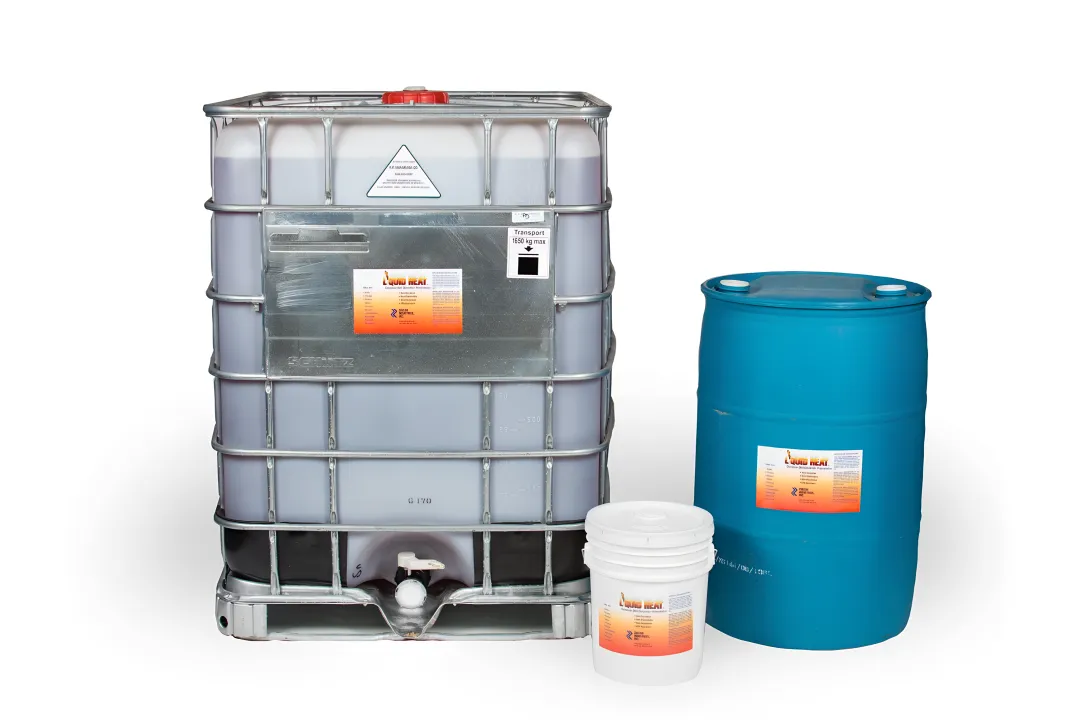
Winter doesn't stop production. In mining, aggregate, and rail operations, conveyor belts and chutes have to keep moving even when temperatures drop well below zero. Liquid Heat is a conveyor belt deicer built for those conditions, with a freeze point down to -60°F.
But many buyers and safety managers hit the same wall: they can't easily locate or interpret the Liquid Heat Safety Data Sheet (SDS) before purchase or on-site use. That's a problem, since OSHA requires this documentation before hazardous chemicals ever touch a job site.
This guide breaks down what an SDS is, walks through what each section of the Liquid Heat SDS covers, and shows you exactly where to get the current official document.
Key Takeaways
- SDS is legally required under OSHA's Hazard Communication Standard and GHS for every hazardous workplace chemical
- Liquid Heat carries a documented -60°F freeze point, making its SDS a key reference for cold-weather safety planning
- All 16 standard SDS sections equip buyers for informed purchasing and handling decisions
- Request the official Liquid Heat SDS directly from Zircon Industries/DirectChem
What Is a Safety Data Sheet (SDS) and Why It Matters for Deicers
An SDS is a standardized document that communicates a chemical's hazards, safe handling practices, and emergency response information. It follows a format set by OSHA's Hazard Communication Standard and the Globally Harmonized System (GHS).
Under 29 CFR 1910.1200, manufacturers and importers must develop an SDS for every hazardous chemical they produce. Employers must keep one on file for each hazardous chemical used in their workplace. This is a compliance requirement, not optional paperwork.
Deicing chemicals vary widely in their hazard profiles. Some glycol- or salt-based formulas carry specific classifications for skin or eye irritation, and salt runoff can affect aquatic life if it isn't managed properly. For deicer users, the SDS is especially relevant:
- Mining operations handling bulk deicer volumes need it for hazard communication programs
- Road maintenance crews applying product in variable weather need clear PPE guidance
- Trucking fleets transporting deicer between sites need transport and storage details
Each of these operations must keep SDS documents accessible to employees during every work shift, in a printed binder or an electronic system with barrier-free access.
Liquid Heat Deicer: Product Overview
Liquid Heat is Zircon Industries' conveyor belt and equipment deicer, built on over 55 years of specialty chemical R&D at the company's Cleveland, Ohio headquarters. It was originally developed back in 1972, after extreme cold repeatedly disrupted coal mines and power plants relying on inclined conveying systems.
That original problem is still the core use case today: preventing freeze-ups on conveyor belts, chutes, rollers, idlers, and equipment across mining, aggregate, and quarry operations.
Built for Extreme Cold
The product's standout spec is a documented -60°F freeze point. Liquid Heat stays liquid and sprayable at that temperature rather than gelling. Standard deicers often lose effectiveness well before that point.
Industries relying on this performance include:
- Coal mines and power plants
- Aggregate, cement, and steel operations
- Gold, copper, and iron-ore mining
- Wood-chip and recycling facilities
- Trucking operations hauling sand, rock, coal, or mulch
One aggregate customer, Conco Western Stone in Illinois, reportedly nicknamed it "Miracle Juice" after it outperformed the antifreeze they'd used previously.
Pairing the Product with Automation
Liquid Heat also integrates with Zircon's automated deicer spray systems, which cuts manual labor and product waste. System options include:
- Basic ON/OFF timer system
- Allen Bradley PLC system with touchscreen (to -50°F, up to three spray points)
- Remote-controlled system for hard-to-reach locations

Reviewing the SDS alongside the product's technical data gives buyers a complete picture of both what the chemical does and how to handle it safely before it ships to a site.
Breaking Down the Liquid Heat SDS: Key Sections You Need to Know
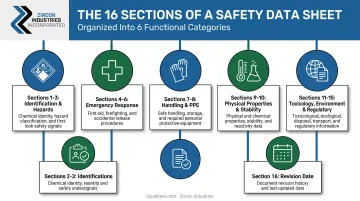
Every SDS follows the same 16-section format required under OSHA's hazard communication guidance. Here's what each grouping means for Liquid Heat specifically.
Sections 1-3: Identification, Hazards, and Composition
- Section 1 identifies the product, recommended use, and Zircon Industries' supplier contact information
- Section 2 lists the GHS hazard classification, signal word, and pictograms
- Section 3 covers the general ingredient category without disclosing the proprietary formula
Liquid Heat's product literature describes it as non-flammable, non-corrosive, and non-hazardous, with ingredients approved by OSHA and the EPA. Those descriptors are useful, but they don't replace the specific classification language in Section 2. Always check the current SDS directly for the exact hazard statements.
Sections 4-6: Emergency Response
These sections cover what to do if something goes wrong:
- Section 4 outlines first-aid steps for skin contact, eye contact, and inhalation
- Section 5 lists appropriate fire-fighting media and combustion hazards
- Section 6 details spill containment and cleanup procedures
Given Liquid Heat's non-flammable classification, fire response steps differ from what you'd expect with a solvent-based product, but the specific extinguishing media and cleanup steps are spelled out in the document itself.
Sections 7-8: Handling, Storage, and PPE
- Section 7 covers safe handling practices, storage conditions, and material incompatibilities
- Section 8 specifies exposure limits, engineering controls, and required PPE
This is one of the most operationally relevant groupings for job-site supervisors setting up handling protocols, and we'll dig deeper into it in the next section.
Sections 9-10: Physical Properties and Stability
Section 9 lists measurable properties: appearance, odor, pH, flash point, and freeze point. The -60°F freeze point is the headline figure here, confirmed in Liquid Heat's product documentation. Section 10 covers chemical stability and any conditions or materials to avoid.
Sections 11-15: Toxicology, Environment, Disposal, and Regulatory Status
This block covers toxicological data, ecological effects, disposal considerations, transport classification, and applicable regulations. OSHA includes these sections for GHS consistency; other agencies enforce most of the underlying requirements.
Liquid Heat holds a GSA Canadian Compliant designation, documented here alongside other regulatory notes.
Section 16: Revision Date
Always check this field first. It tells you when the SDS was last updated. The current English version is listed as V7.0, with matching French and Norwegian translations available. An outdated SDS can mean outdated hazard information, so confirming the revision date protects your compliance position.
Safe Handling, Storage & PPE Best Practices for Liquid Heat
Getting handling right isn't just about safety. It protects the product's cold-weather performance too.
Storage and Container Handling
Liquid Heat ships in 5-gallon pails, 55-gallon drums, 330-gallon totes, and bulk tanks starting at 1,500 gallons. Across every container size:
- Follow Section 7 of the SDS for storage conditions
- Keep closures sealed and containers upright when not in use
- Protect product from contamination that can degrade cold-weather performance
Required PPE
OSHA requires PPE selection based on an actual workplace hazard assessment, not a one-size-fits-all glove or goggle choice. Typical PPE for concentrated deicer handling includes:
- Chemical-resistant gloves matched to the specific hazard
- Safety glasses or goggles for splash protection
- Protective clothing for extended handling tasks
Refer to Section 8 of the current Liquid Heat SDS for the exact specifications tied to this product.
Spill Response
Section 6 covers containment and cleanup for accidental releases. Stage absorbent material and a written containment plan on-site before you need them—that cuts response time and limits exposure.
Automated spray systems also lower exposure by reducing direct worker contact with concentrated product versus manual pouring or spraying.
How to Access the Official Liquid Heat SDS
Always source your SDS directly from the manufacturer. Third-party listings can be outdated, mislabeled, or simply wrong, and that puts your compliance program at risk.
To request the current Liquid Heat SDS, use one of these verified channels:
- Email DirectChem at staff@directchem.com, or Zircon Industries directly at staff@liquidheat.com
- Call the toll-free line at 800-547-4328, or the main office at (216) 595-0200
- Submit a request through the Liquid Heat contact form
Buying direct from Zircon Industries keeps documentation support in the same place you order—SDS and technical data sheets included. Buyers typically save 30-50% compared to distributor pricing, and get faster answers when the SDS is revised and you need the latest version quickly.
Frequently Asked Questions
What is Liquid Heat deicer used for?
Liquid Heat prevents freeze-ups on conveyor belts, chutes, rollers, and equipment in mining, aggregate, and other cold-weather industrial operations. It's applied as both a deicer and an ice preventative.
Is an SDS required by OSHA for deicing chemicals?
Yes. OSHA's Hazard Communication Standard requires an SDS for every hazardous chemical used in the workplace, and employers must keep it readily accessible to employees during each shift.
Where can I find the official Liquid Heat Safety Data Sheet?
Request the current version directly from DirectChem/Zircon Industries by phone at 800-547-4328, by email at staff@liquidheat.com, or through their website contact form.
What PPE is recommended when handling Liquid Heat?
Typical PPE includes chemical-resistant gloves and eye protection, based on the specific hazards identified in Section 8 of the SDS and your site's own hazard assessment.
Is Liquid Heat corrosive or hazardous to skin?
Product literature describes Liquid Heat as non-corrosive and non-hazardous, but the exact hazard classification and any skin-contact precautions are documented in Sections 2 and 4 of the current SDS.
How should Liquid Heat be stored to maintain effectiveness in cold temperatures?
Liquid Heat remains liquid and sprayable down to its -60°F freeze point without gelling. Follow the container handling and storage guidance in Section 7 of the SDS to preserve that performance over time.