The challenge is that “apply cleaner, scrub, rinse” sounds simple until it fails in the field. Results vary dramatically depending on grease type, surface material, degreaser chemistry, dwell time, temperature, dilution, and application method. The wrong combination can damage surfaces, leave residue behind, or force repeated cleaning cycles — and in industrial environments, all three outcomes are expensive.
This guide covers the complete process: step-by-step removal, degreaser selection, preparation, and the process variables that separate a single-pass clean from repeated failed attempts.
Key Takeaways
- Match degreaser chemistry to grease type, surface material, coatings, seals, and disposal requirements
- Always dry-remove bulk grease before applying any degreaser
- Dwell time matters; rinsing too early is one of the most common reasons grease remains after cleaning
- Temperature, dilution ratio, surface contact, and mechanical agitation determine whether cleaning actually works
- Re-lubricate equipment after degreasing where the cleaning process removes required protective lubrication
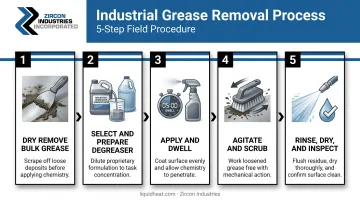
Step-by-Step: How to Remove Industrial Grease
Step 1: Dry Remove Excess Grease First
Before reaching for any chemical, remove the bulk of surface grease mechanically. Use plastic scrapers, industrial rags, or approved absorbent materials such as oil absorbent pads or industrial absorbent granules. Avoid improvised absorbents where they could create contamination, fire, housekeeping, or disposal issues.
Skipping this step is a common and costly mistake. Applying degreaser directly onto thick grease buildup can overload the cleaner, reduce contact with the actual surface, increase waste volume, and force multiple passes when mechanical pre-removal would have made the cleaning process faster.
Before you scrape, identify what you're dealing with:
- Fresh grease from recent lubrication — fluid, emulsifies quickly with standard treatment
- Aged or hardened grease — partially oxidized, requires longer dwell time
- Baked-on or carbonized deposits — polymerized grease common on hot engine surfaces; may need a two-stage approach
- Sludge — a mixture of oil, grease, and fine particulate common in mining and aggregate environments; often the most resistant to single-pass cleaning
Step 2: Select and Prepare Your Degreaser Solution
Choose your degreaser based on grease severity and surface type (see the selection guide below). Dilute according to manufacturer specifications — stronger concentration is not always more effective and can damage surfaces or create unnecessary chemical exposure.
PPE must be selected before the container is opened. At minimum, review the product SDS and site hazard assessment for:
- Chemical-resistant gloves compatible with the degreaser
- Safety goggles or face protection where splashing is possible
- Protective clothing or aprons for heavy spray, splash, or soak work
- Respiratory protection only when required by the SDS, exposure assessment, ventilation conditions, or the site's respiratory protection program
OSHA 29 CFR 1910.132 requires employers to assess workplace hazards, select appropriate PPE, communicate PPE decisions to affected employees, and ensure the PPE properly fits.
Step 3: Apply Degreaser and Allow Dwell Time
Apply the degreaser via spray, brush, or soak depending on component size and geometry. Ensure complete coverage — recessed areas, joints, and seams accumulate grease and are easy to miss.
Allow adequate dwell time — this is where many industrial degreasing jobs succeed or fail. Dwell time varies by product, concentration, temperature, surface geometry, and grease type. Always follow the manufacturer's instructions and keep the surface wet long enough for the chemistry to penetrate and lift the contamination. Rinsing too early can leave a thin grease film that dries back and re-attracts dust or particulate.
Step 4: Agitate and Scrub
Chemical action alone rarely removes heavy industrial grease. Mechanical agitation is often required to physically lift loosened grease off the surface, especially on textured concrete, equipment seams, conveyor components, and hardened buildup.
Match your agitation method to the surface:
- Stiff nylon brushes — general surfaces, coated or painted components
- Wire brushes — bare metal with heavy deposits (avoid on coated surfaces)
- Pressure washers — large equipment, floors, and machinery exteriors
Work in sections. If you try to clean the entire surface at once, the degreaser dries before you can rinse it, leaving residue that makes the next pass harder.
When pressure washing sensitive components, follow the equipment manufacturer's cleaning guidance. Avoid directing high-pressure water at electrical connectors, bearings, seals, radiators, sensors, labels, and lubricated joints unless the manufacturer specifically allows it. Keep enough distance from the surface to prevent water intrusion or component damage.
Step 5: Rinse, Dry, and Inspect
Rinse thoroughly when the degreaser is designed for water rinse. Degreaser residue left on surfaces can attract new dirt, contribute to corrosion, interfere with coatings, or create slip hazards on floors. For enclosed components, confirm that rinsing is allowed, drainage is complete, and no water remains trapped before reassembly.
Once rinsed, inspect under good lighting:
- Check joints, seams, and recessed areas for remaining grease pockets
- Re-apply and repeat on any stubborn spots
- Allow surfaces to dry completely
- Re-lubricate or apply protective coatings where required — degreasing can remove both unwanted contamination and necessary protective lubrication
Choosing the Right Industrial Degreaser for Your Application
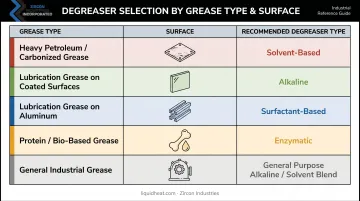
Degreaser chemistry must match the grease composition and surface. A solvent that cuts through heavy petroleum deposits on bare steel may strip protective coatings, discolor aluminum, or degrade rubber seals. Here's how the main categories break down.
Solvent-Based Degreasers
Solvent-based degreasers are best for heavy petroleum-based grease, hydrocarbon oils, tar-like deposits, asphalt residue, and stubborn buildup on compatible bare metal. They can work quickly, but they also carry higher safety, ventilation, flammability, VOC, and disposal considerations than many water-based or citrus-based alternatives.
Zircon Industries' Z99 Safety Solvent Degreaser is a non-flammable synthetic solvent with no flash point, leaving no residue after self-evaporation. It contains no petroleum distillates and no ozone-depleting chemicals, and carries a Level-1 storage rating. Documented applications include engine parts, motors, bearings, gears, generators, production machinery, and general industrial and automotive degreasing. Review the current SDS for PPE, ventilation, and disposal requirements before use.
Regulatory exposure depends on the solvent chemistry and how it is used. EPA regulates certain halogenated solvent cleaning operations under NESHAP, and EPA finalized TSCA risk-management rules for methylene chloride and trichloroethylene in 2024. Spent halogenated solvents used in degreasing can also fall under RCRA F-listed hazardous waste categories under 40 CFR 261.31. Always review the SDS, waste profile, air requirements, and local environmental rules before selecting or disposing of a solvent-based degreaser.
Alkaline (Water-Based) Degreasers
Alkaline degreasers operate above neutral pH and may use builders such as sodium hydroxide, potassium hydroxide, silicates, phosphates, or other alkaline components depending on the formulation. They help break, emulsify, or saponify oily and greasy soils so they can be rinsed away. They are effective across a wide range of industrial grease and oil soils and are often easier to manage than aggressive solvent systems, but they still require PPE, compatibility checks, and proper wastewater handling.
One important compatibility note: aluminum, zinc, magnesium, copper, and some coated surfaces can be damaged by high-pH cleaners if the product is not properly inhibited or rinsed. Always verify surface compatibility before application, test a small area when practical, and follow the manufacturer's dilution and rinse instructions.
Surfactant and Citrus Degreasers
Surfactant-based and citrus-based degreasers use emulsification, wetting, and lifting action to loosen grease, oil, grime, asphalt, and tar from the surface. Surfactants reduce surface tension so the cleaner can penetrate soils more effectively, while citrus terpene chemistry can help dissolve petroleum-style residues without relying on traditional petroleum distillates.
Citrus-terpene degreasers use plant-derived solvency to penetrate, loosen, and lift grease, grime, asphalt, oil, and tar from compatible surfaces. They can often be rinsed away with water after the cleaning cycle, making them suitable for applications where rinsing is practical. Always confirm compatibility with the surface material, coatings, and seals, and follow the product label and SDS for PPE, ventilation, runoff controls, and disposal.
Degreaser Selection Quick Reference
| Grease Type | Surface | Recommended Degreaser Type |
|---|---|---|
| Heavy petroleum / carbonized deposits | Compatible bare steel | Solvent-based or heavy-duty citrus-based, depending on soil and site requirements |
| Lubrication grease, light to moderate | Painted or coated surfaces | Mild alkaline, surfactant-based, or citrus-based after compatibility testing |
| Lubrication grease | Aluminum or soft metals | Surface-compatible, pH-controlled cleaner verified by the SDS/product guidance |
| Tar, asphalt, oil, and grime | Equipment and metal parts | Solvent degreaser such as Z99, where compatible |
| Protein-type or bio-based grease | Food-contact surfaces | Food-plant-approved cleaner selected for that specific application |
| General industrial grease | Mixed surfaces | Alkaline, surfactant-based, or citrus-based depending on surface, waste handling, and grease severity |
What You Need Before You Start
Get these two things right before touching any degreaser: the right materials for the job and confirmed safety compliance. Skipping either step leads to incomplete cleaning or a chemical incident.
Equipment and Materials Checklist
- Appropriate degreaser for the application (matched to grease type and surface)
- Plastic scrapers for coated or sensitive surfaces; metal scrapers only where the surface can tolerate them
- Absorbent materials (sawdust, cat litter, or absorbent pads)
- Stiff nylon brushes for general and coated surfaces
- Wire brushes for bare metal with heavy deposits
- Pressure washer or hose with appropriate nozzle
- Industrial rags or microfiber cloths for drying
- Access to clean water for rinsing
Safety and Compliance Readiness
Before applying any degreaser, confirm:
- The SDS has been reviewed for hazards, PPE, first aid, storage, and disposal
- Chemical-resistant gloves, eye protection, and any additional PPE are selected based on the product and task
- Ventilation is adequate for the specific cleaner, especially when using solvent-based or aerosol products indoors
- Ignition sources are controlled when using flammable or combustible cleaners
- A waste disposal plan is in place before cleaning starts
- Wastewater, rinse water, absorbents, and spent solvent are handled according to the SDS and applicable environmental regulations
Key Variables That Determine Results
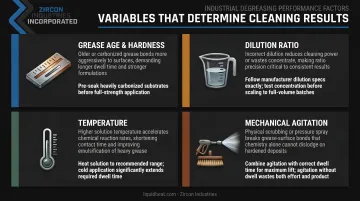
The difference between a single-pass clean and repeated failed attempts almost always comes down to controlling these four variables.
- Grease age and hardness: Fresh grease emulsifies quickly. Aged or baked-on grease has polymerized and may need pre-heating, extended dwell time, or a two-stage approach — mechanical scraping first, then a high-dwell degreaser application.
- Dilution ratio: Using too little concentration can reduce cleaning power; using too much on surfaces rated for diluted application can damage materials, increase residue, and waste product. Match dilution to the product label and SDS. Heavy-duty degreasing may require a stronger mix than light maintenance cleaning, but stronger is not automatically better.
- Temperature: Warm water can improve cleaning performance for many water-based degreasers by helping soften and emulsify grease. Cold water can reduce effectiveness, especially on hardened or waxy deposits. For cold-environment operations — outdoor winter cleaning in mining, aggregate, trucking, or construction — choose a degreaser formulated for the expected temperature range and confirm whether heating is recommended.
- Mechanical agitation: Chemical action breaks down grease chemistry; physical agitation removes it from the surface. Pressure washers handle large equipment and floors well. Brushing is better for intricate machine components where high-pressure water could force contamination deeper or damage sensitive parts.
Common Mistakes When Removing Industrial Grease
Even experienced operators fall into these patterns. Each one either undermines the cleaning result or creates a new problem downstream.
- Applying degreaser directly to thick buildup without dry pre-removal first — this overloads the cleaner and forces multiple passes to accomplish what a scrape-first approach handles faster
- Rinsing before dwell time is complete — the surface looks wet, so operators rinse early; the result can be a thin grease film that dries back and re-attracts particulate
- Letting degreaser dry on the surface — dried cleaner can leave residue, streaking, or rework depending on the formulation
- Using one degreaser across all surfaces without checking compatibility — a cleaner safe on bare steel may strip coatings, discolor aluminum, or degrade rubber seals on the same machine
- Skipping re-lubrication after cleaning — degreasing can remove protective lubrication along with contamination. Without reapplying the correct lubricant where required, wear can accelerate
Frequently Asked Questions
What is the strongest industrial degreaser?
The strongest option depends on the grease, surface, and compliance constraints. Solvent-based degreasers can be highly aggressive on heavy petroleum or carbonized deposits, while heavy-duty alkaline, citrus-based, and surfactant-based degreasers can perform well on many industrial greases with fewer solvent-management concerns. The best choice is the strongest product that cleans effectively without damaging the surface or creating unnecessary disposal, ventilation, or worker-exposure issues.
Can I remove baked-on industrial grease without disassembling equipment?
Yes, in many cases. Extended dwell time, safe surface warming, and brush or pressure-washer agitation can loosen baked-on grease without full disassembly. However, components with heavy internal accumulation, trapped grease, electrical sensitivity, or lubrication-critical areas may still need partial disassembly for safe and thorough cleaning.
What is the difference between a solvent degreaser and an alkaline degreaser?
Solvent degreasers dissolve grease, oil, tar, or asphalt using solvent chemistry. Alkaline degreasers use high-pH chemistry, builders, and surfactants to break, emulsify, or saponify soils so they can be rinsed away. Solvents can be faster on certain petroleum deposits, while alkaline and citrus-based options may be easier to manage for routine industrial cleaning when they are compatible with the surface and wastewater requirements.
How often should industrial machinery be degreased?
Frequency depends on operating intensity, grease exposure, safety risk, equipment type, and manufacturer maintenance requirements. High-use equipment in mining, aggregate, fleet, or conveyor operations may need frequent cleaning, while lighter machinery may only need periodic maintenance cleaning. Build the schedule around inspection results, slip-risk areas, equipment performance, and manufacturer guidance.
Are industrial degreasers safe to use on all metal surfaces?
No. Some solvents can damage coatings, plastics, rubber, or soft metals, and some high-pH alkaline cleaners can discolor or corrode aluminum, zinc, magnesium, or copper if they are not properly inhibited or rinsed. Always verify surface compatibility through the SDS, product guidance, and a small test area when practical.
How should you dispose of industrial degreaser waste?
Disposal depends on the product chemistry, contamination picked up during cleaning, and local waste rules. Spent halogenated solvents used in degreasing may be RCRA F-listed hazardous waste, and oily absorbents, sludge, rinse water, or solvent mixtures may require special handling. Do not pour degreaser waste, oily rinse water, or solvent waste into drains unless your facility is specifically authorized to do so. Follow the SDS, complete the required waste determination, consult local regulations, and use a licensed waste disposal service where required.