Introduction
Vehicle movement, loading, crushing, wind, and material handling can release dust across quarries, aggregate operations, construction zones, trucking yards, and other industrial grounds. The resulting dust can reduce visibility, load equipment filters, increase water use, and move beyond the immediate work area.
Dust suppression additives improve the way water wets particles, retain moisture in an unpaved surface, bind fine material together, or form a protective crust over an undisturbed pile. Those mechanisms are different, so the correct product depends on the dust source and how the treated area is used.
The EPA's primary annual National Ambient Air Quality Standard for PM2.5 is 9.0 micrograms per cubic meter, calculated as an annual mean averaged over three years. This is an ambient-air standard used for geographic air-quality management, not a direct pass-or-fail limit for one facility. A site's dust-control obligations depend on its permits, state and local requirements, work activities, exposure-control program, and any applicable OSHA or MSHA standards.
This guide explains the main types of dust suppression additives, how each category works, and how to match the chemistry to an industrial surface, static pile, watering program, climate, and operating schedule.
Key Takeaways
- Dust suppression additives work by retaining moisture, improving wetting, binding particles, or sealing a static surface.
- Five broad categories include hygroscopic chlorides, organic binders and bio-based humectants, polymer emulsions, petroleum-based products, and surfactant-enhanced water.
- Product selection depends on the dust source, surface use, traffic, weather, drainage, and application equipment.
- RDS38, Glycerin DC-100, Latex 100, and ZHP Water Wetter serve different applications and should not be treated as interchangeable products.
What Are Dust Suppression Additives and Why Do They Matter?
What Is a Dust Suppression Additive?
A dust suppression additive is introduced into water or applied to soil, gravel, aggregate, or another industrial material to reduce the release of fine airborne particles. Some additives keep the surface damp. Others bind fines together or form a crust that resists wind erosion.
Common application points include:
- High-traffic gravel surfaces within mining and quarry operations
- Aggregate handling areas and industrial trucking yards
- Construction staging areas and unpaved facility entrances
- Stockpiles, fly ash areas, unused lots, and open railcar tops
- Water-based dust-control systems at crushers, transfer points, and applicable milling equipment
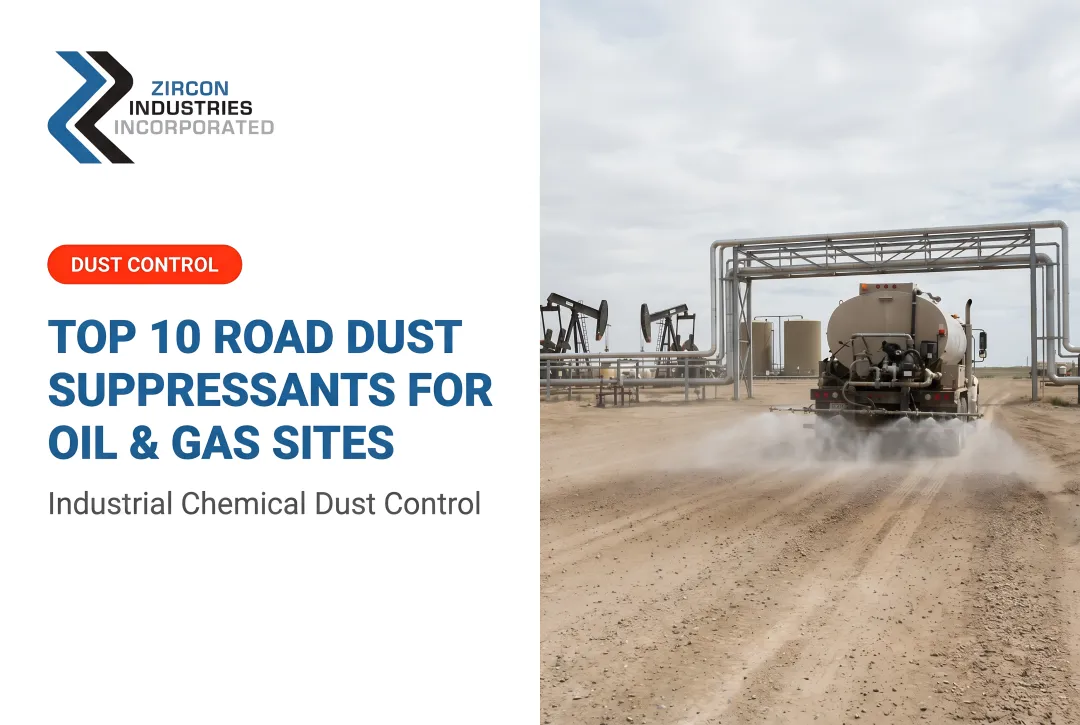
Application methods include water trucks, mobile or fixed spray equipment, manual application, and product-specific turnkey treatment. Zircon Industries delivers and applies RDS38 Road Dust Stabilizer as a turnkey service, with application included in the product price. Other Zircon dust-control products are designed for the facility's own application equipment.
Why Dust Suppression Additives Matter in Industrial Operations
Dust control supports visibility, equipment reliability, housekeeping, worker-exposure controls, and site air-quality management. NIOSH identifies off-road haul trucks as a major dust source at surface mine sites and notes that traffic, dry weather, and material spillage can reduce the duration of surface wetting.
Without an effective control plan, operations may experience:
- Reduced visibility around mobile equipment and loading areas
- Faster loading of engine filters, cab filters, and air intakes
- Loss of surface fines followed by rutting, washboarding, or increased grading
- More frequent water-truck cycles and higher labor demand
- Greater difficulty meeting permit, exposure-control, monitoring, and documentation requirements
An additive can support a facility's dust-management program, but product selection is only one part of the control plan. Application rate, coverage, equipment condition, traffic, housekeeping, monitoring, and site-specific procedures determine the final result.
Types of Dust Suppression Additives
Dust suppression additives are grouped by how they act on the particles or treated surface. Service life and application rate must be evaluated product by product; a duration claimed for one formulation does not apply to every chemical in the same category.
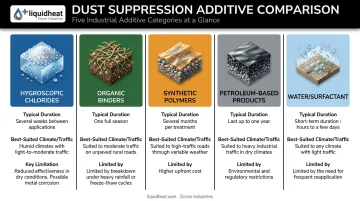
Hygroscopic Chloride Salts and Brines (Calcium Chloride & Magnesium Chloride)
Hygroscopic chlorides attract and retain moisture, helping keep fine particles damp and less likely to become airborne. Calcium chloride and magnesium chloride are common examples. Their performance depends on available moisture, humidity, surface composition, traffic, application rate, and drainage.
RDS38 Road Dust Stabilizer is Zircon Industries' calcium chloride-based treatment for demanding, high-traffic unpaved industrial surfaces. It continually pulls and retains moisture in the surface so vehicle movement can help compact existing and newly introduced fines.
- Application model: Delivered and applied by Zircon Industries as a turnkey service
- Typical duration: One application lasts approximately three to four months
- Moisture response: Atmospheric moisture and rainfall help reactivate its moisture-retaining action
- Suitable settings: Quarry and aggregate areas, trucking yards, lumberyards, and other heavily used gravel industrial surfaces
Chloride treatments require product-specific evaluation of drainage, nearby vegetation and water, surface materials, and equipment compatibility. Site maintenance may include cleaning exposed equipment and monitoring application coverage to prevent unnecessary product movement.
Organic Binders and Bio-Based Humectants
This category includes products with different mechanisms. Lignosulfonates coat and bind fine particles, while glycerin-based products act primarily as humectants that help retain moisture. Both can reduce airborne dust, but they should not be described as the same chemistry.
Glycerin DC-100 is Zircon Industries' self-applied, soy oil-derived option. Glycerin is a byproduct of biodiesel manufacturing, and the product is listed as 100% food-derived and biodegradable.
- Initial mixture: 50% Glycerin DC-100 and 50% water
- Initial application: One gallon of the blended solution per approximately 20 square feet
- Coverage: One 330-gallon tote of concentrate covers approximately 13,000 square feet after mixing
- Typical duration: Approximately three to four weeks per application
- Maintenance: Intermittent watering or atmospheric moisture helps maintain product activity, while later applications can benefit from residual product
Glycerin DC-100 is a do-it-yourself treatment for unpaved industrial and gravel surfaces. Application should follow the product literature, SDS, drainage controls, and site-specific environmental requirements.
Synthetic Polymer Emulsions and Acrylic Copolymer Stabilizers
Polymer emulsions create a film or crust that holds surface particles in place. Their performance depends on polymer type, dilution, application depth, curing conditions, weather, and whether the treated material remains undisturbed.
Zircon's Latex 100 Static Dust Control Sealant forms a clear, brittle crust over static surfaces. It is designed for undisturbed coal, iron ore, and aggregate piles, fly ash areas, unused lots, and open railcar tops. It is not intended for active piles or surfaces carrying regular vehicle traffic.
Latex 100 can provide control for a few days or more than 12 months when its dilution matches the storage period and the surface remains undisturbed. Published application guidance ranges from one part Latex 100 to 100 parts water for approximately one week of control to one part Latex 100 to four parts water for approximately 12 to 18 months.
Strengths and application considerations include:
- Long control intervals on static materials
- A clean, clear crust that limits wind and water erosion
- Flexible dilution for short- or long-term storage
- Curing and undisturbed surface conditions are required for the crust to remain effective
Petroleum-Based Products (Bitumen and Asphalt Emulsions)
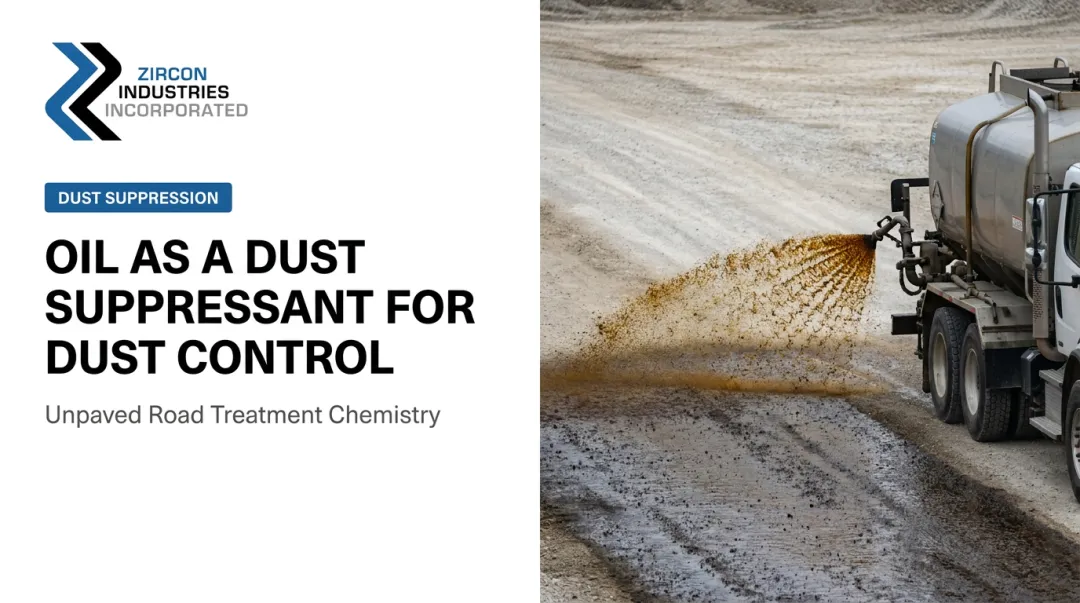
Bitumen and asphalt emulsions control dust by coating or sealing fine surface material. Their formulations, curing behavior, runoff profile, maintenance requirements, and permitted uses vary, so selection must be based on the specific product and jurisdiction.
Petroleum-based treatments may provide a durable surface, but they can make later grading and material handling more difficult. Facilities should also distinguish purpose-formulated commercial emulsions from used oil. The EPA prohibits the use of used oil as a dust suppressant under 40 CFR 279.82.
Zircon Industries does not offer a petroleum-based dust suppressant in its current dust-control line. Its products cover calcium chloride treatment, glycerin-based moisture retention, static latex sealing, and surfactant-enhanced watering.
Water and Surfactant-Enhanced Water
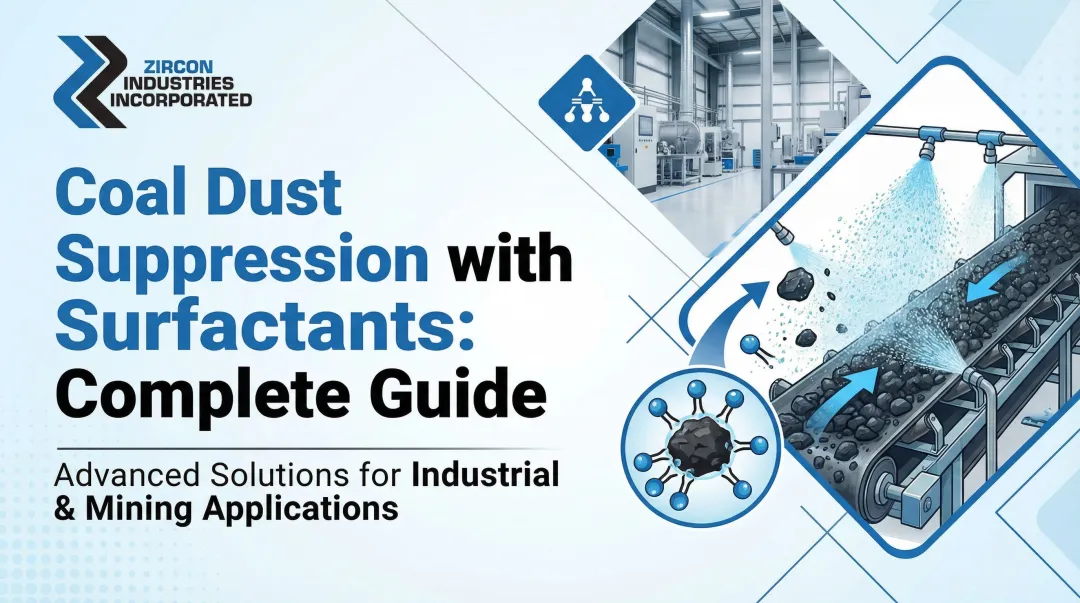
Plain water controls dust by wetting the particles, but its duration depends on evaporation, wind, traffic, material porosity, and application coverage. Surfactants lower water's surface tension so it spreads and penetrates more effectively instead of beading or rolling away from the target material.
ZHP Water Wetter is a non-ionic surfactant and resin extender for routine water-based dust-control programs. It is introduced at a ratio of 1,500 to 3,000 parts water to one part ZHP. Continued use allows the resin extenders to build, which can help reduce watering frequency over time.
Zircon's ZHP Truck-Mounted Transfer System introduces the product into a water truck. The truck's own tank, hoses, spray bar, and nozzles apply the treated water to the surface; the transfer system is not a standalone site-spraying system.
For applicable small and large drivable milling-machine tasks, OSHA Table 1 requires supplemental water spray combined with a surfactant. ZHP supplies the surfactant component of that control method. The employer implements and documents the complete equipment, water-delivery, work-practice, maintenance, and respiratory-protection requirements that apply to the task.
Strengths and application considerations include:
- Improves water spreading, coverage, and penetration
- Works with routine water-based application programs
- Uses a small amount of product relative to water volume
- Watering frequency still depends on weather, traffic, material, and dust generation
How to Choose the Right Type of Dust Suppression Additive
Start with the dust source and how the treated area is used. Product chemistry matters, but it cannot compensate for a mismatch between an active surface, a static pile, and a water-based spray application.
- Surface and material composition: Particle size distribution, fines content, permeability, drainage, and compaction affect absorption and retention.
- Traffic and disturbance: High-traffic gravel industrial surfaces need a treatment that tolerates repeated vehicle movement. Static piles can use a crust-forming sealant that would not fit an active area.
- Climate and moisture: Humidity, rainfall, evaporation, wind, and freezing conditions influence hygroscopic products, watering schedules, and polymer curing.
- Dust source: Vehicle movement, wind erosion, crushing, conveying, and transfer points may require different controls or a combination of controls.
- Environmental and regulatory requirements: Review permits, drainage controls, nearby soil and water, SDS information, OSHA or MSHA requirements, and any local product restrictions.
- Application capability: Confirm whether the product is turnkey-applied, mixed and sprayed by site crews, introduced into a water truck, or applied through fixed equipment.
The Zircon product line separates these applications clearly:
- Choose RDS38 for turnkey treatment of demanding, high-traffic unpaved industrial surfaces.
- Choose Glycerin DC-100 for a self-applied, bio-based moisture-retention program.
- Choose Latex 100 for static, undisturbed piles and surfaces that need a protective crust.
- Choose ZHP Water Wetter when the facility wants to improve an existing water-based dust-control program.
Before full application, confirm the current product literature and SDS, inspect the application equipment, and evaluate a representative treatment area under normal operating conditions. Record product rate, treated area, weather, traffic, and dust observations so later adjustments are based on site data.
What to Check Before Finalizing a Dust Suppression Additive
The best selection is the product that matches the site's operating pattern and can be applied consistently. Review these points before purchase:
- Product boundary: Confirm whether the formulation is intended for active surfaces, static piles, water enhancement, or another specific source.
- Material and equipment compatibility: Evaluate metals, elastomers, pumps, tanks, nozzles, surface materials, and any required cleanup practices.
- Weather response: Check moisture needs, curing time, rainfall response, freezing conditions, and evaporation.
- Drainage and runoff controls: Plan application around storm drains, waterways, vegetation, process water, and site containment requirements.
- Application rate and duration: Use product-specific figures and account for traffic, disturbance, weather, and maintenance.
- Handling and documentation: Keep the current label, SDS, application records, inspection results, and relevant permits available to the operating team.
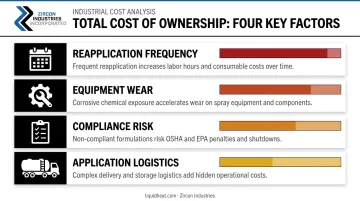
Compare total program cost instead of price per gallon:
| Cost factor | Why it matters |
|---|---|
| Reapplication frequency | Determines seasonal product use, labor, and equipment time |
| Water and equipment demand | Affects water-truck cycles, fuel, maintenance, and staffing |
| Surface maintenance | Grading, filling, cleanup, and material replacement can outweigh the chemical price |
| Monitoring and documentation | Supports permit, exposure-control, and site-management requirements |
| Application logistics | Turnkey service, self-application, and truck injection require different labor and equipment |
RDS38 includes delivery and field application by Zircon Industries. Glycerin DC-100, Latex 100, and ZHP Water Wetter are applied through the site's appropriate equipment. Contact staff@liquidheat.com for current availability, service coverage, packaging, freight information, and application guidance.
Conclusion
Dust suppression additives serve different operating needs. Hygroscopic chlorides retain moisture on active unpaved surfaces. Bio-based humectants support self-applied moisture control. Polymer emulsions seal static piles. Petroleum emulsions create a coated surface, while surfactants improve the reach and persistence of a water-based program.
Zircon Industries has manufactured industrial specialty chemicals since 1970. Its dust-control line includes RDS38 Road Dust Stabilizer for turnkey treatment of high-traffic industrial surfaces, Glycerin DC-100 for self-applied bio-based dust control, Latex 100 for undisturbed piles and static areas, and ZHP Water Wetter for surfactant-enhanced watering. Matching each product to its intended application supports a more consistent and defensible site dust-control program.
Frequently Asked Questions
What chemical is used for dust suppression?
Common dust suppression chemicals include calcium chloride, magnesium chloride, lignosulfonates, glycerin-based humectants, polymer emulsions, bituminous emulsions, and surfactants. RDS38 Road Dust Stabilizer is Zircon Industries' calcium chloride-based option for high-traffic unpaved industrial surfaces; it is not a polymer blend.
How long does a dust suppression additive last once applied?
Duration is product- and site-specific. Plain water may require repeated application as the surface dries. Glycerin DC-100 typically lasts three to four weeks. RDS38 typically lasts three to four months. Latex 100 can last from days to approximately 12 to 18 months on a properly treated surface that remains undisturbed. Traffic, weather, material, application rate, and maintenance affect actual service life.
Are dust suppression chemicals safe for the environment?
Environmental properties vary by formulation, concentration, application rate, and site. Glycerin DC-100 is food-derived from soy oil and listed as biodegradable, while chloride, polymer, petroleum, and surfactant products have different runoff and handling considerations. Review the current label and SDS and follow the facility's drainage, wastewater, spill-control, and disposal procedures.
What's the difference between dust suppression and soil stabilization?
Dust suppression reduces the release of fine particles from a surface or material. Soil stabilization changes structural properties such as strength, bearing capacity, or resistance to deformation. Some treatments can improve compaction or surface integrity while controlling dust, but a dust suppressant should not be presented as structural stabilization unless its documentation supports that use.
Can dust suppressants damage equipment or vehicles?
Compatibility depends on the product and exposed material. Chloride-based treatments may require equipment-cleaning and corrosion-management procedures, while polymers and surfactants can have their own pump, seal, hose, and cleanup requirements. Review compatibility, apply the correct rate, and maintain application equipment according to the product and equipment instructions.
How do I choose between chloride-based and polymer-based dust suppressants?
Choose according to surface use. A chloride-based product such as RDS38 fits a demanding, high-traffic unpaved industrial surface because it retains moisture and works with repeated vehicle movement. A polymer product such as Latex 100 fits a static pile or undisturbed surface because it forms a crust that must remain intact. Traffic, moisture, application capability, drainage, and desired service interval should guide the final choice.