However, repeated sodium chloride use can increase corrosion, affect concrete and reinforcing steel, and add chloride to surrounding soil and water. Its melting performance also declines sharply as surface temperatures fall. These limitations make it worth considering other chloride deicers, chloride-free products, traction materials, and mechanical snow-removal methods.
This guide explains the main alternatives to rock salt, where each option fits, and how facility teams can match a deicer to their surfaces, equipment, weather conditions, and winter-maintenance priorities.
Key Takeaways
- Rock salt performs best at warmer winter surface temperatures and becomes much less efficient below approximately 15 degrees F.
- Calcium chloride and magnesium chloride are alternatives to sodium chloride, but they are still chloride salts and require controlled application.
- Ice Breaker Green combines magnesium chloride with a patented corn-based additive for high-priority walkways and facility surfaces.
- Calcium magnesium acetate provides a chloride-free chemical option, while agricultural additives are typically blended with chloride brines rather than used as complete replacements.
- Abrasives improve traction but do not melt ice, so they work best as part of a broader snow and ice management plan.
What Are Salt Alternatives?
In winter maintenance, "salt alternatives" usually means alternatives to rock salt, or sodium chloride. Some of these products are still salts, while others contain no chloride and work through a different chemical or physical process.
The main options include:
- Other chloride compounds: Calcium chloride and magnesium chloride
- Acetate-based deicers: Calcium magnesium acetate (CMA) and related formulations
- Organic and agricultural additives: Beet-derived liquids and other plant-based or fermentation by-products
- Abrasives: Sand, cinders, and similar traction materials
- Non-chemical methods: Mechanical snow removal, timely scraping, and heated pavement or walkway systems
There is no universal best choice. Surface temperature, precipitation, ice thickness, application timing, traffic, drainage, and surface compatibility all influence performance. A product selected for a high-priority facility entrance may not be the right product for a conveyor belt operating in severe cold.
Why Consider Alternatives to Rock Salt?
Rock salt must dissolve into brine before it can melt ice. As the surface temperature drops, that process slows and the amount of ice that a given quantity of salt can melt decreases. The Minnesota Department of Transportation identifies 15 to 20 degrees F as the minimum practical application range for sodium chloride, even though its theoretical freezing point is lower.
That distinction matters for industrial facilities. A deicer's eutectic or freeze point does not automatically represent its practical ice-melting temperature. Actual results depend on the product concentration, pavement temperature, moisture, dilution, application rate, and the time available for the product to work.
The Environmental and Infrastructure Cost
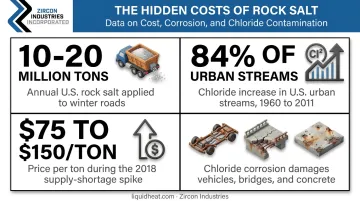
Deicing salts separate into ions when they dissolve. Chloride does not break down through ordinary environmental processes, so repeated applications can contribute to chloride accumulation in soil, groundwater, and surface water. A U.S. Geological Survey study found that chloride levels increased substantially in 84% of the urban streams analyzed.
Repeated chloride exposure can also affect facility assets, including:
- Vehicle undercarriages and exposed metal equipment
- Reinforcing steel in concrete structures
- Concrete and masonry exposed to repeated wetting, freezing, and thawing
- Interior flooring where deicer residue is tracked through entrances
These concerns do not mean every chloride product has the same corrosion profile. Product concentration, additives, application rate, drainage, cleaning practices, and the materials being exposed all influence the outcome.
Supply Isn't Guaranteed, Either
Winter storms can cause sharp increases in deicer demand, making product availability and lead times important parts of seasonal planning. Facilities that depend on a single product format may have fewer options when inventory is low or weather arrives earlier than expected.
A more resilient plan identifies suitable alternatives before winter, confirms storage and application requirements, and maintains enough inventory for priority surfaces. Direct and bulk ordering can also help industrial operations select a package size that matches their expected seasonal use.
The right alternative depends on whether the goal is faster melting, lower corrosion, chloride reduction, proactive ice prevention, or temporary traction. The following options solve different parts of the winter-maintenance problem.
Calcium Chloride
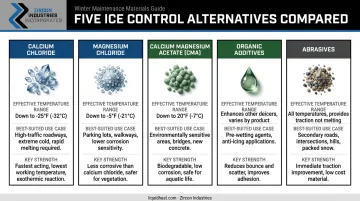
Calcium chloride is an alternative to sodium chloride, but it is still a chloride salt. It releases heat as it dissolves, which helps it form brine and begin working in colder conditions than rock salt.
- Temperature performance: Works at lower temperatures than sodium chloride; practical results vary with product concentration, surface temperature, and application conditions
- Best suited for: Cold-weather spot treatment and industrial surfaces where fast brine formation is a priority
- Key strengths: Exothermic dissolution and stronger low-temperature performance than rock salt
- Considerations: Can contribute to corrosion, surface residue, and chloride loading if overapplied or poorly managed
Calcium chloride should be applied at the manufacturer's recommended rate. More product does not automatically produce faster or more reliable results, especially when ice is thick or additional precipitation is diluting the treatment.
Magnesium Chloride
Magnesium chloride is widely used in liquid deicer formulations because it can be applied evenly and can help prevent ice from bonding when placed before freezing conditions. Like calcium chloride, it is still a chloride salt, so concentration, corrosion control, drainage, and application rate remain important.
Ice Breaker Green Liquid Deicer from Zircon Industries combines a 30% magnesium chloride solution with a patented corn-based additive. It is designed for high-priority walkways, concrete, pavement, facility entrances, tile floors, carpeting, and related interior and exterior facility surfaces.
- Freeze protection: The additive lowers the product's freeze point from -20 degrees F to -70 degrees F, helping the liquid remain usable in severe cold
- Coverage: One gallon covers up to 1,500 square feet when applied according to product guidance
- Corrosion profile: 90% less corrosive than traditional salts
- Application: Provides full liquid coverage and can be applied proactively to help prevent ice bonding
Ice Breaker Green can be applied with suitable manual spray equipment for grounds and walkway treatment. Zircon's automated deicer spray systems are designed for applying Liquid Heat to conveyor belts and related material-handling equipment, not for automatically spraying an entire facility site.
Calcium Magnesium Acetate (CMA) and Acetate-Based Deicers
Calcium magnesium acetate is a non-chloride deicer produced from dolomitic limestone and acetic acid. Instead of relying on chloride brine, it helps prevent snow and ice from bonding tightly to the treated surface, supporting easier mechanical removal.
- Temperature performance: Formulation and application method determine practical performance; product instructions should guide use in colder conditions
- Best suited for: Chloride-sensitive surfaces and locations where corrosion reduction is a primary concern
- Key strengths: Chloride-free formulation, low toxicity, and biodegradability
- Considerations: Higher material cost than common chloride deicers and generally slower action on established ice
CMA can be valuable where protecting metal and reinforced concrete carries more weight than achieving the lowest upfront material cost. As with any deicer, facilities should evaluate surface compatibility, drainage, wastewater requirements, and application instructions before use.
Agricultural and Organic By-Products
Beet-derived liquids, fermentation by-products, and other agricultural materials are commonly used as additives to chloride brines. They may improve adhesion, reduce bounce and scatter, lower a blend's freezing point, or help manage corrosion, depending on the formulation.
- Best suited for: Formulated liquid or prewetted deicer programs that are designed to use the specific additive
- Key strengths: Can improve handling or residual performance and make use of renewable or recovered feedstocks
- Considerations: Many products still contain chloride, and performance varies by blend, concentration, and weather conditions
Clear Roads research on agricultural-based winter products found that the tested additives could inhibit freezing and reduce the corrosivity of salt brine on carbon steel, but they did not improve ice-melting capacity. These products should therefore be evaluated as formulated additives rather than assumed to be standalone, salt-free ice melters.
Traction Materials and Abrasives
Sand, cinders, and similar abrasives do not lower water's freezing point. They provide temporary grip on top of packed snow or ice.
- Best suited for: Temporary traction, very low temperatures, and areas awaiting mechanical snow or ice removal
- Key strengths: Work without a melting reaction and can provide immediate surface texture
- Considerations: Do not remove ice, can be displaced by traffic, may be tracked indoors, and require collection and cleanup
Abrasives are most effective when placed selectively on high-risk areas such as ramps, steps, loading zones, and pedestrian approaches. Spent material should be managed through the facility's housekeeping and stormwater procedures.
How to Choose the Right Alternative for Your Needs
Choosing an alternative to rock salt begins with the surface and operating conditions, not the lowest advertised temperature or the lowest price per unit. A product's label, technical literature, and SDS should be reviewed alongside the facility's winter-maintenance and stormwater procedures.
Factors to Consider
- Surface temperature: Select the product using expected surface temperature rather than air temperature alone. Review whether the published number is a product freeze point, eutectic temperature, or practical application range.
- Application objective: Decide whether the treatment must prevent bonding before a storm, melt existing ice, assist mechanical removal, or provide temporary traction.
- Scale of application: Bagged material may suit limited spot treatment, while liquid deicers and appropriate manual sprayers can provide more consistent coverage across facility entrances, walkways, loading docks, and other priority areas.
- Surface and equipment sensitivity: Consider concrete condition, reinforcing steel, exposed metals, flooring, seals, and any equipment that may contact the product or tracked residue.
- Drainage and exposure: Account for nearby soil, vegetation, storm drains, waterways, employee traffic, and the facility's wastewater controls.
- Total seasonal cost: Include labor, storage, application equipment, cleanup, reapplication, corrosion control, and potential downtime rather than comparing material price alone.
Mistakes to Avoid Before Finalizing Your Choice
- Treating an advertised freeze point as a guaranteed field melting temperature without accounting for dilution, surface temperature, and precipitation
- Assuming every alternative to rock salt is chloride-free or non-corrosive when calcium chloride and magnesium chloride are also salts
- Using the wrong application equipment instead of matching the sprayer or delivery system to the specific product and surface
- Applying more chemical than needed rather than combining measured application with timely plowing, scraping, and post-storm cleanup
For industrial grounds, a liquid surface deicer such as Ice Breaker Green can provide even coverage through suitable manual spraying equipment. Conveyor belts, rollers, idlers, chutes, switches, and truck beds require a purpose-formulated product such as Liquid Heat, which can be paired with Zircon's manual or automated conveyor spray systems.
Conclusion
Rock salt remains common, but its declining cold-weather efficiency, chloride loading, and corrosion potential make alternatives worth evaluating for industrial winter maintenance.
The right choice depends on the facility's surface temperatures, exposure risks, materials, drainage, traffic, and application objective. Calcium chloride can support faster action in colder conditions. Magnesium chloride formulations can provide broad liquid coverage and proactive ice control. CMA offers a chloride-free option for sensitive locations, while abrasives supply temporary traction without melting the ice.
For high-priority walkways and facility surfaces, Zircon Industries' Ice Breaker Green combines magnesium chloride with a patented corn-based additive and is available for direct and bulk ordering in 5-gallon pails, 55-gallon drums, 330-gallon totes, and tank quantities with a 1,500-gallon minimum. Zircon Industries has manufactured industrial specialty chemicals since 1970. Contact staff@liquidheat.com for current pricing, freight information, packaging availability, and application guidance.
Frequently Asked Questions
What can I sprinkle on sidewalks instead of salt?
Sand and other approved abrasives can be spread to improve traction, but they do not melt ice. Calcium chloride and magnesium chloride granules can replace sodium chloride for melting, although they are still salts. If avoiding chloride is the priority, consider a labeled acetate-based product or use mechanical removal with a suitable traction material.
What melts ice the fastest besides salt?
Calcium chloride often begins forming brine faster than sodium chloride in cold conditions because it releases heat as it dissolves. However, calcium chloride is still a salt. Product concentration, surface temperature, ice thickness, and application rate determine how quickly any deicer works in the field.
Are salt alternatives safe for pets and plants?
Safety and compatibility vary by formulation and application rate. No deicer should be treated as universally safe for animals, vegetation, drains, or waterways. Follow the product label and SDS, apply only the recommended amount, prevent unnecessary access during treatment, and clean tracked residue as part of the facility's winter-maintenance program.
What is the best alternative to salt for large facility pavements and loading docks?
For high-priority industrial walkways and facility surfaces, Ice Breaker Green provides even liquid coverage and proactive ice-bond prevention. The best application plan depends on surface temperature, drainage, traffic, and site conditions, so facilities should confirm rates and spray equipment for their specific use.
Can I make a homemade ice melt alternative to salt?
Homemade mixtures vary in concentration, performance, surface compatibility, and handling requirements. Industrial facilities are better served by a labeled commercial deicer with defined application guidance and an SDS, combined with mechanical snow removal and approved traction materials where needed.
How do I choose between calcium chloride and magnesium chloride?
Choose based on the complete formulation and the surface being treated. Calcium chloride is useful when rapid brine formation in colder conditions is the priority. A magnesium chloride formulation such as Ice Breaker Green is suited to even liquid coverage and proactive treatment of high-priority walkways and facility surfaces. In either case, review corrosion, drainage, application rate, and surface-compatibility requirements before use.