Introduction
Coal power plants in cold climates face a critical operational challenge: frozen conveyor belts can shut down coal feed to boilers in minutes, triggering production slowdowns that cost upwards of $125,000 per hour in lost generation. When ambient temperatures plunge below 20°F, coal—especially high-fines material with 3-5% moisture content—bonds aggressively to belt surfaces, idlers, and transfer chutes, creating freeze conditions that halt material flow entirely.
The stakes are high for coal handling systems specifically. Rubber belts lose elasticity below 32°F and can stiffen to the point of cracking at sub-zero temperatures. Ice formation on inclined belts causes material slide-back, where the head drum spins uselessly because friction has vanished.
The result is emergency shutdowns, costly repairs, and production losses that dwarf the cost of prevention. Choosing a deicer engineered for extreme cold, automated application, and compatibility with coal fines is what separates uninterrupted winter operation from expensive downtime. This guide ranks the top 10 conveyor belt deicers for coal power plants to help you make that call.
Key Takeaways
- Conveyor belt deicers prevent ice formation by lowering the freeze point of moisture on coal and belt surfaces, eliminating material slide-back and belt stiffening below 32°F
- Coal plants in northern climates need deicers rated to at least -10°F, with the most reliable products protecting down to -45°F
- Conveyor Belt Deicer by Zircon Industries offers -60°F freeze protection with automated spray system compatibility
- Chemical deicers and thermal heating systems both solve freezing — chemical options cost less upfront, while thermal systems add complexity and infrastructure
Why Conveyor Belt Freezing Is a Critical Issue in Coal Power Plants
Coal conveyor systems in power plants deal with compounding winter stressors simultaneously: high-fines coal absorbs moisture readily, belts run outdoors or through open transfer houses exposed to precipitation, and long idle periods between shifts allow rubber to cool well below 32°F.
When this happens, belts stiffen, lose their trough shape, and develop frozen bonds with material that prevent normal operation.
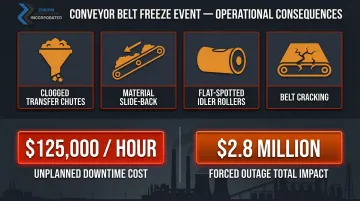
The downstream consequences are severe:
- Clogged transfer chutes where frozen coal blocks material flow entirely
- Material slide-back on inclines, where the head drum spins but cannot pull the belt because ice has eliminated friction
- Flat spots on idler rollers caused by frozen contact points, destroying bearings and creating vibration
- Belt cracking or shattering at extreme temperatures when rubber loses all elasticity
According to ABB's Value of Reliability survey, unplanned outages cost the typical industrial business close to $125,000 per hour. In coal power plants, conveyor freeze events can create serious operational risk because coal handling areas directly affect fuel flow to boilers.
Top 10 Conveyor Belt Deicers for Coal Power Plants
These products are selected based on:
- Freeze point performance in extreme cold
- Compatibility with automated spray systems
- Suitability for coal plant environments
- Non-corrosive formulation relative to belt and chute components
- Proven reliability in heavy industrial operations
Conveyor Belt Deicer (Zircon Industries)
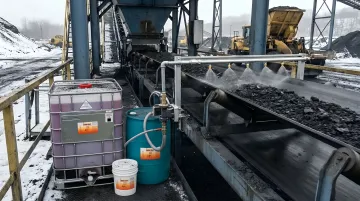
Zircon Industries' Liquid Heat Conveyor Belt Deicer is built for conveyor belts, rollers, idlers, chutes, switches, truck beds, and other freeze-prone bulk material handling surfaces. Backed by 55+ years of Zircon Industries' specialty chemical experience, it is designed for extreme winter freeze-control applications in coal, aggregate, mining, rail, and industrial operations.
The formulation reaches a -60°F freeze point, which outperforms most chemical deicers on the market. It's also compatible with automated spray systems that eliminate human error and product waste. It is also compatible with automated spray systems or manual sprayers, helping coal plants apply freeze-control treatment consistently across belts, idlers, rollers, chutes, and other high-risk areas.
| Specification | Details |
|---|---|
| Active Ingredient / Chemistry | Proprietary freeze-point depressant blend |
| Freeze Protection Range | Down to -60°F |
| Application Method | Automated spray system compatible; also applied to idlers, rollers, chutes, and truck beds |
Benetech BT-955++ Freeze Conditioning Agent
Benetech, Inc. (Montgomery, IL) serves coal-fired power, mining, and aggregate industries with bulk material handling solutions. Their BT-955++ is a dedicated glycol-based conveyor belt deicer designed specifically for winter bulk material operations in the power sector.
The product protects down to -45°F using BT955++ diethylene glycol-based freeze conditioning chemistry that weakens ice crystal structure and helps prevent material bonding on conveyors, idlers, rollers, transfers, switches, and trucks. It also reduces dust during cold-weather offloading, making it a recognized option among coal plant operators across the Midwest.
| Specification | Details |
|---|---|
| Active Ingredient / Chemistry | Diethylene glycol-based freeze-point depressant blend with side-release agents |
| Freeze Protection Range | Down to -45°F |
| Application Method | Compatible with Benetech's automated deicing spray systems; applied to belt surface and bulk material |
Thermo-Tech Conveyor Belt Heater System
Thermo-Tech, Inc. (Keyser, WV) has provided conveyor belt and material flow heating solutions since 1984. Their patented belt heater is a heat-based alternative to chemical deicers. It operates continuously under the belt to prevent ice formation rather than treating it after the fact.
While not a chemical deicer, it addresses the same belt-freezing problem and is frequently evaluated alongside chemical solutions. The Model D system delivers up to 400,000 BTUs and operates at a fraction of the per-application cost of liquid deicers, providing continuous protection — particularly effective for stopping drive-roll slippage on inclined coal plant conveyors. Confirm MSHA, OSHA, site safety, and fuel-system requirements before installing any heat-based conveyor belt heater in coal handling environments.
| Specification | Details |
|---|---|
| Active Ingredient / Chemistry | Heat-based (diesel, propane, natural gas, or electric); no chemical application |
| Freeze Protection Range | Continuous protection as long as heat is applied; effective at ambient temperatures below 32°F down to -40°F |
| Application Method | Installed under the belt at the drive end; thermostat-controlled |
EnviroTech Services FreezeTrol Series
EnviroTech Services (Greeley, CO) manufactures the FreezeTrol line of freeze conditioning agents for coal, ore, and aggregate. The series offers three formulations with varying freeze protection and environmental profiles.
Product lineup:
| Product | Chemistry | Freeze Protection | Application Rate |
|---|---|---|---|
| FreezeTrol 62 | Bio-polymer based | Down to -30°F | 1-4 pints/ton |
| FreezeTrol 77-W | Chloride-free synthetic | Down to -40°F | 2-8 pints/ton |
| FreezeTrol 78-G | Bio-polymer & inorganic blend | Down to -60°F | 2-4 pints/ton |
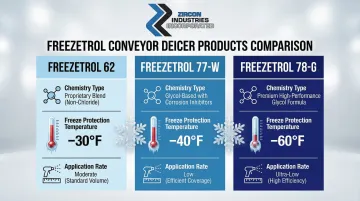
The series includes freeze conditioning options that may be relevant for facilities evaluating stormwater and runoff requirements. Coal power plants should still review each product's SDS, TDS, chloride content, application rate, and site-specific permit obligations before use.
Kress Corporation Belt-A-Tack Conveyor Deicer
Kress Corporation is a long-standing supplier of specialty chemicals for mining and bulk material handling. Their Belt-A-Tack product line includes formulations designed to prevent coal from freezing to conveyor belt surfaces and improve belt-to-load friction on icy belts.
Known for effectiveness on steep-angle belts common in coal plant reclaim systems. Note: Manufacturer verification is required for current product specifications, temperature performance range, and automated spray system compatibility.
| Specification | Details |
|---|---|
| Active Ingredient / Chemistry | Manufacturer verification required (typically glycol or acetate-based formulation) |
| Freeze Protection Range | Manufacturer verification required |
| Application Method | Manufacturer verification required for spray-system compatibility and coverage rate |
Natural Soda LLC Industrial Conveyor Deicer
Natural Soda LLC (Colorado) produces sodium bicarbonate-derived and natural mineral-based specialty chemical products for industrial applications, including bulk material handling freeze control. Specific conveyor deicer product offerings suitable for coal plants require manufacturer verification before specification.
Potential environmental compliance advantages may apply in coal plant EPA operating environments, though freeze point performance, application rates, and automated spray system compatibility all require direct manufacturer confirmation.
| Specification | Details |
|---|---|
| Active Ingredient / Chemistry | Manufacturer verification required (natural mineral or sodium-based chemistry) |
| Freeze Protection Range | Manufacturer verification required |
| Application Method | Manufacturer verification required for spray or dry application compatibility |
Cargill Industrial Deicer (Conveyor-Grade)
Cargill's deicing division produces a range of liquid and solid freeze-point depressants for industrial and infrastructure applications. Whether their product line includes conveyor belt-grade formulations specifically suited for coal plants requires manufacturer confirmation.
Large-scale supply capability is a potential advantage for high-volume operations. Pricing structure, bulk delivery options, and technical compatibility with rubber conveyor belts and coal fines environments should all be verified directly with Cargill.
| Specification | Details |
|---|---|
| Active Ingredient / Chemistry | Manufacturer verification required (typically chloride or magnesium chloride-based) |
| Freeze Protection Range | Manufacturer verification required |
| Application Method | Manufacturer verification required for spray system or manual application |
ASHTA Chemicals Conveyor Freeze Conditioner
ASHTA Chemicals (Ashtabula, OH) is a specialty chemical manufacturer serving industrial markets. Specific offerings for conveyor belt freeze conditioning in coal and power generation applications require direct confirmation from the manufacturer.
Proximity to Great Lakes coal plant operations provides a potential logistical advantage. Industry certifications, MSHA/OSHA compliance details, and automated belt spray integration should be confirmed before procurement.
| Specification | Details |
|---|---|
| Active Ingredient / Chemistry | Manufacturer verification required |
| Freeze Protection Range | Manufacturer verification required |
| Application Method | Manufacturer verification required for spray, manual, or automated system compatibility |
QualiChem Specialty Belt Deicer
QualiChem produces specialty chemical solutions for industrial maintenance applications. Coal-plant-grade conveyor belt deicer availability, formulation details, and applicable industrial certifications all require manufacturer verification before specifying.
Non-corrosive properties relative to metal belt components and chute liners common in coal power plant transfer systems, along with any available case studies from the power generation sector, should be requested directly from the manufacturer.
| Specification | Details |
|---|---|
| Active Ingredient / Chemistry | Manufacturer verification required |
| Freeze Protection Range | Manufacturer verification required |
| Application Method | Manufacturer verification required for manual, drum pump, or automated spray system |
Wilbur-Ellis (Peak) Industrial Conveyor Deicer
Wilbur-Ellis (via its Peak Industries agricultural and industrial chemical division) distributes specialty freeze-control products for bulk material handling operations. Conveyor-grade deicer availability, regional distribution in coal-plant-heavy areas, and full technical specifications require manufacturer confirmation.
The broad national distribution network is a potential logistical advantage for coal plants across multiple U.S. regions. Formulation suitability for high-fines bulk materials like coal, and compatibility with rubber belt surfaces, should be verified before ordering.
| Specification | Details |
|---|---|
| Active Ingredient / Chemistry | Manufacturer verification required |
| Freeze Protection Range | Manufacturer verification required |
| Application Method | Manufacturer verification required for spray, pour-over, or automated system |
How We Chose the Best Conveyor Belt Deicers
Products were evaluated using a four-part framework prioritizing real-world performance in coal plant environments:
Freeze point performance below -10°F — Many conventional deicers fail at this threshold, yet northern coal plants regularly operate there. Products rated only to 0°F leave operations exposed during the cold snaps when protection matters most.
Belt material compatibility — Non-corrosive to rubber, metal components, and scraper blades. Review belt compatibility using the deicer manufacturer's SDS/TDS and the belt manufacturer's chemical resistance guidance. For Zircon's Liquid Heat, the official product page states that it is approved for use by Goodyear Belting. Unverified road salts or chloride blends can accelerate wear.
Dual-function capability — Some freeze-control products also support dust reduction by trapping or binding fine particles on material surfaces. This should be treated as a product-specific benefit, not a category-wide assumption.
Application flexibility — Automated spray system compatibility eliminates waste and reduces human error. On long conveyor runs, manual reapplication every 1–2 hours is neither reliable nor cost-effective.
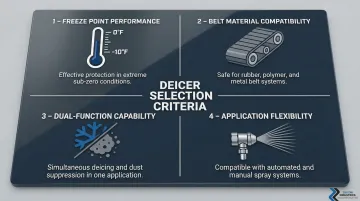
These four criteria expose the gaps that most generic product comparisons miss. Here's where buyers still get tripped up:
Common purchasing mistakes to avoid:
- Choosing based solely on price per gallon without accounting for application frequency and coverage efficiency
- Selecting a product rated only to 0°F when plant operating conditions regularly hit -10°F to -20°F
- Overlooking automated delivery systems that eliminate both waste and labor costs
EPA's NPDES Sector O guidance for steam electric power generating facilities covers stormwater discharges from coal handling areas and coal pile runoff. Before using any conveyor belt deicer, coal plants should confirm SDS/TDS data, runoff impact, and site-specific stormwater permit requirements. Deicers must not contaminate coal feed or create runoff that conflicts with plant stormwater permits. Confirm MSHA and OSHA compatibility for any product before purchasing.
Conclusion
For coal power plant conveyor operations, selecting the wrong deicer—or applying the right one incorrectly—can trigger slide-back events, belt damage, and unplanned outages that cost far more than the deicer itself. The most reliable products combine deep freeze point protection with automated application and dual dust-control function, eliminating both freeze risk and labor inefficiency.
Before committing to a seasonal supply contract, plant managers and maintenance engineers should evaluate candidates against three core factors:
- Operating temperature range — check NOAA climate normals for your region to confirm the product's freeze point covers your worst-case conditions
- Belt length and configuration — longer runs and inclined sections require higher application volumes and precise spray coverage
- Application infrastructure — automated systems reduce labor costs and eliminate human error; verify compatibility before purchasing
Prioritize suppliers with documented field performance in coal, mining, aggregate, or bulk material handling applications, along with clear SDS/TDS data, belt compatibility guidance, and application support.
For plants needing conveyor freeze-control support in extreme winter conditions, Liquid Heat Conveyor Belt Deicer from Zircon Industries is built for belts, rollers, idlers, chutes, switches, truck beds, and other bulk material handling surfaces. Backed by 55+ years of specialty chemical experience, Zircon Industries can support automated spray systems or manual sprayer applications. Contact Zircon Industries at 800-547-4328 to discuss your specific application.
Frequently Asked Questions
What temperature range should a conveyor belt deicer cover for coal power plant operations?
Coal plants in northern U.S. climates regularly see -10°F to -30°F during winter — NOAA's 1991-2020 Climate Normals show North Dakota averaging 14.8°F and Wyoming 19.9°F across December-February. Any deicer rated only to 0°F or -1°F will fail precisely when protection matters most. Choose products with rated freeze points well below your site's historical low.
Are chemical conveyor belt deicers safe for rubber belts in coal power plants?
Quality deicers are formulated to be non-corrosive to rubber belt surfaces, metal components, and scraper blades. However, some antifreeze-based products can degrade rubber over time. Operators should verify belt compatibility with the product data sheet and consult manufacturer chemical resistance charts before deployment.
How are conveyor belt deicers typically applied in coal plant operations?
Automated spray systems mounted at the belt's tail section deliver a measured dose before each revolution, activating via PLC timers and temperature probes only when conditions require it. Manual application is possible but introduces inconsistency and leaves the belt unprotected between passes.
Can conveyor belt deicers also control coal dust during cold weather?
The best-formulated deicers—including glycol-based and proprietary blend products—trap fine particles on the coal surface, suppressing dust even at sub-zero temperatures. This dual function is especially valuable at coal plant transfer and offloading points where fugitive dust complicates compliance and worker safety.
How often should deicer be reapplied on conveyor belts during winter?
Application frequency depends on belt cycle time, ambient temperature, precipitation, and product formulation. Automated systems apply deicer every belt revolution ensuring continuous coverage. Manual methods typically require reapplication every 1-2 hours , making automation the more reliable and cost-effective approach.
What is the difference between glycol-based and proprietary blend conveyor belt deicers?
Glycol-based deicers (like Benetech BT-955++) typically protect to around -45°F. Proprietary blend deicers (such as Zircon's formulation) reach -60°F or lower by combining multiple freeze-point depressant chemistries, while adding anti-adhesion and dust-control properties in a single product.